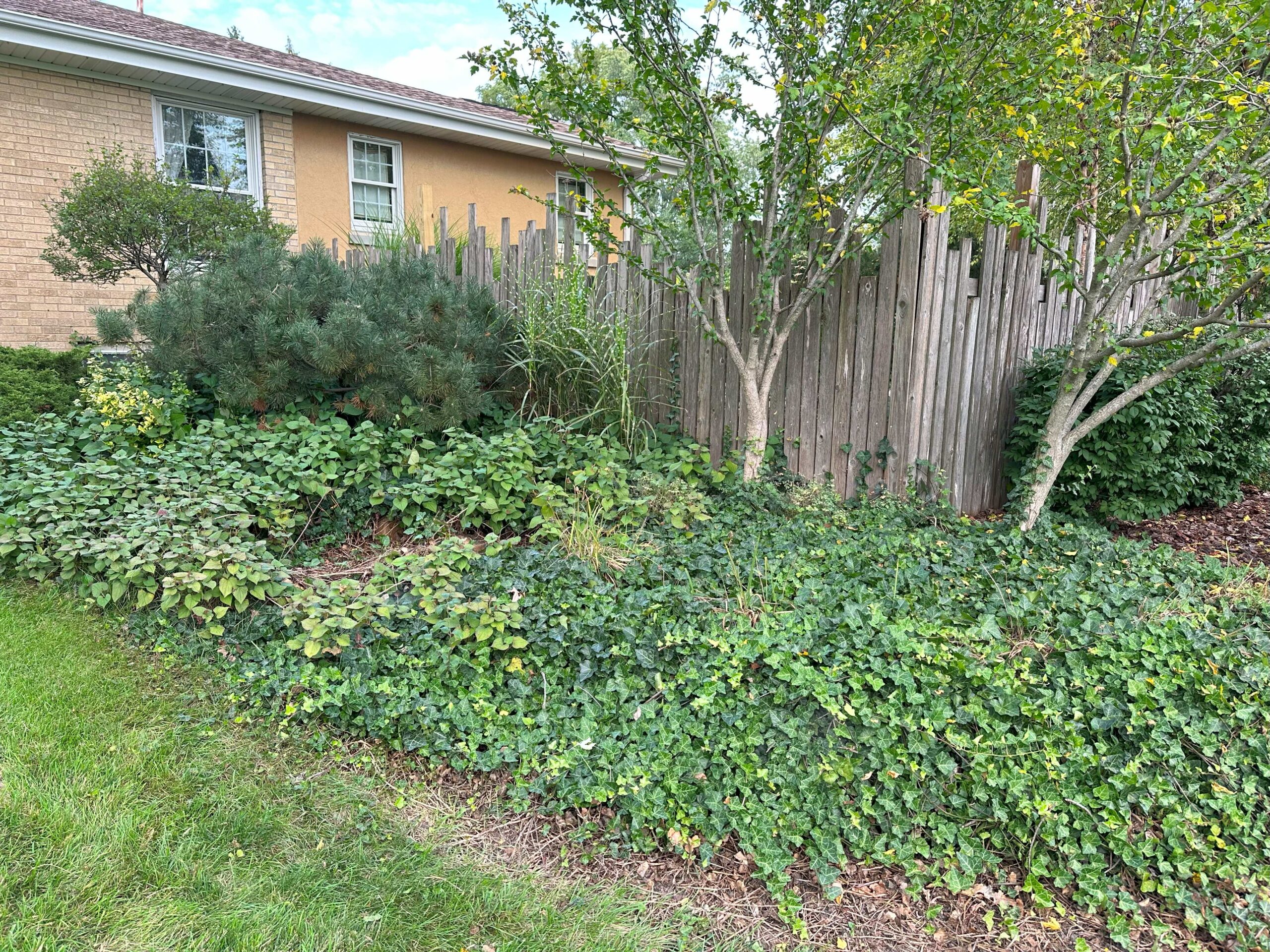
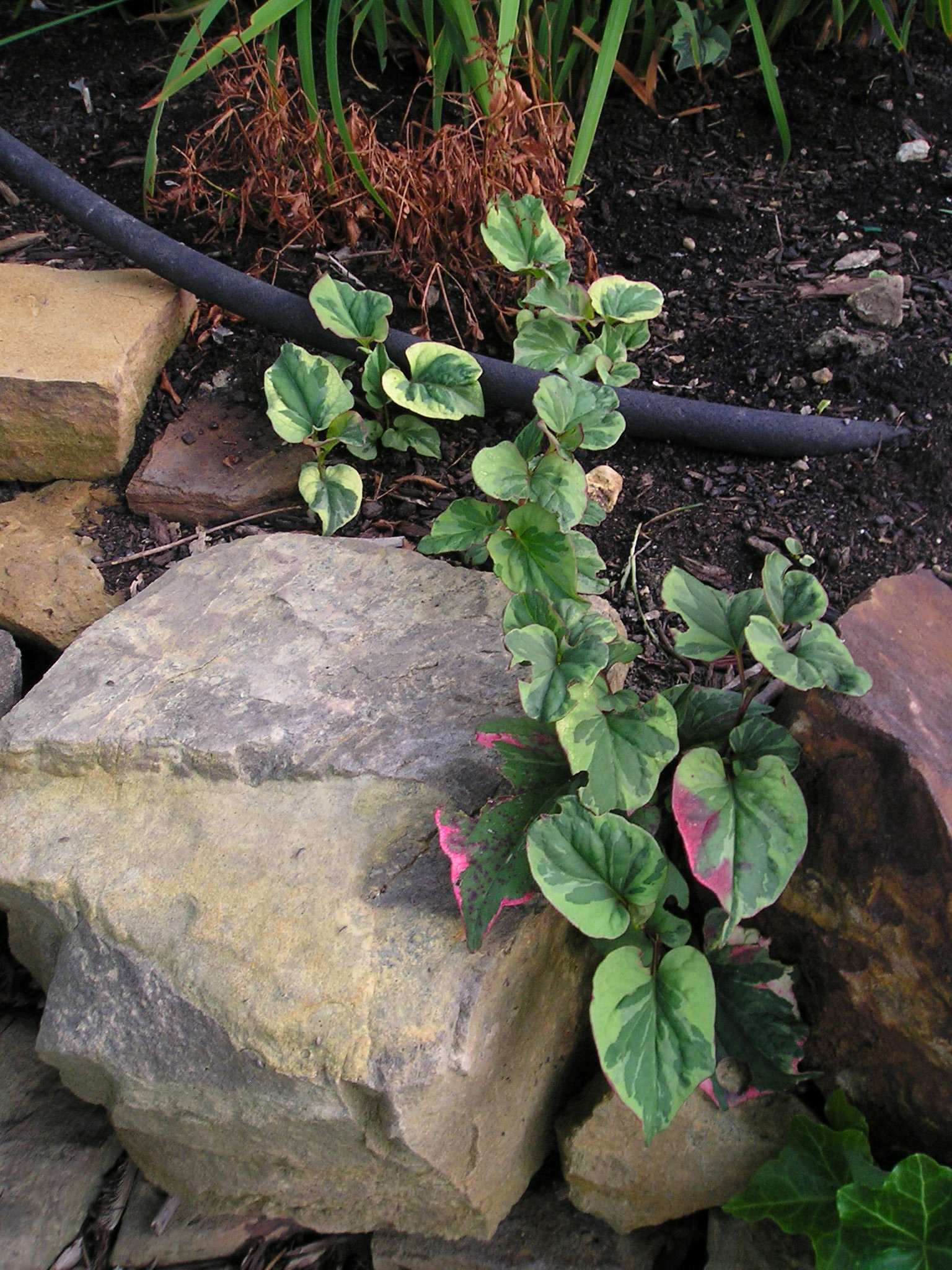
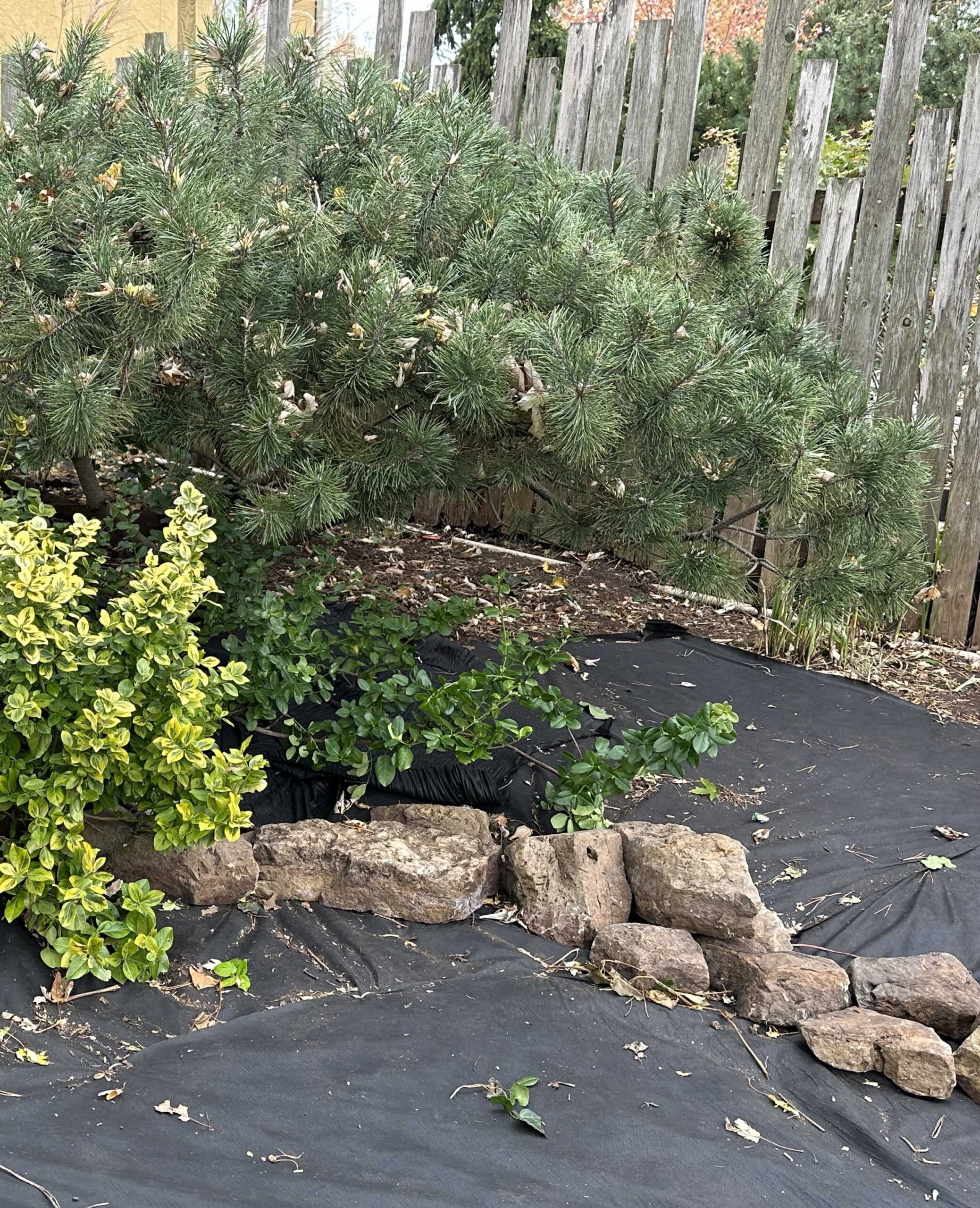
It was a long time ago, in a galaxy far, far away…at least it seems like it. I thought it was a good idea to plant ivy along with our foundation plantings. NOT! Unfortunately, its even worse than that. Take a look at the picture and you just have to say “yuchh”. I had also planted houttuynia, (chameleon plant). In my defense, I was a novice (a.k.a. gullible) gardener. So much so that when the garden center helper said that houttuynia “might” survive in our zone 5, I believed her. Sucker! The reality is that It doesn’t get worse than ivy and houttuynia when it comes to invasive. Think predator (oops – wrong movie.).
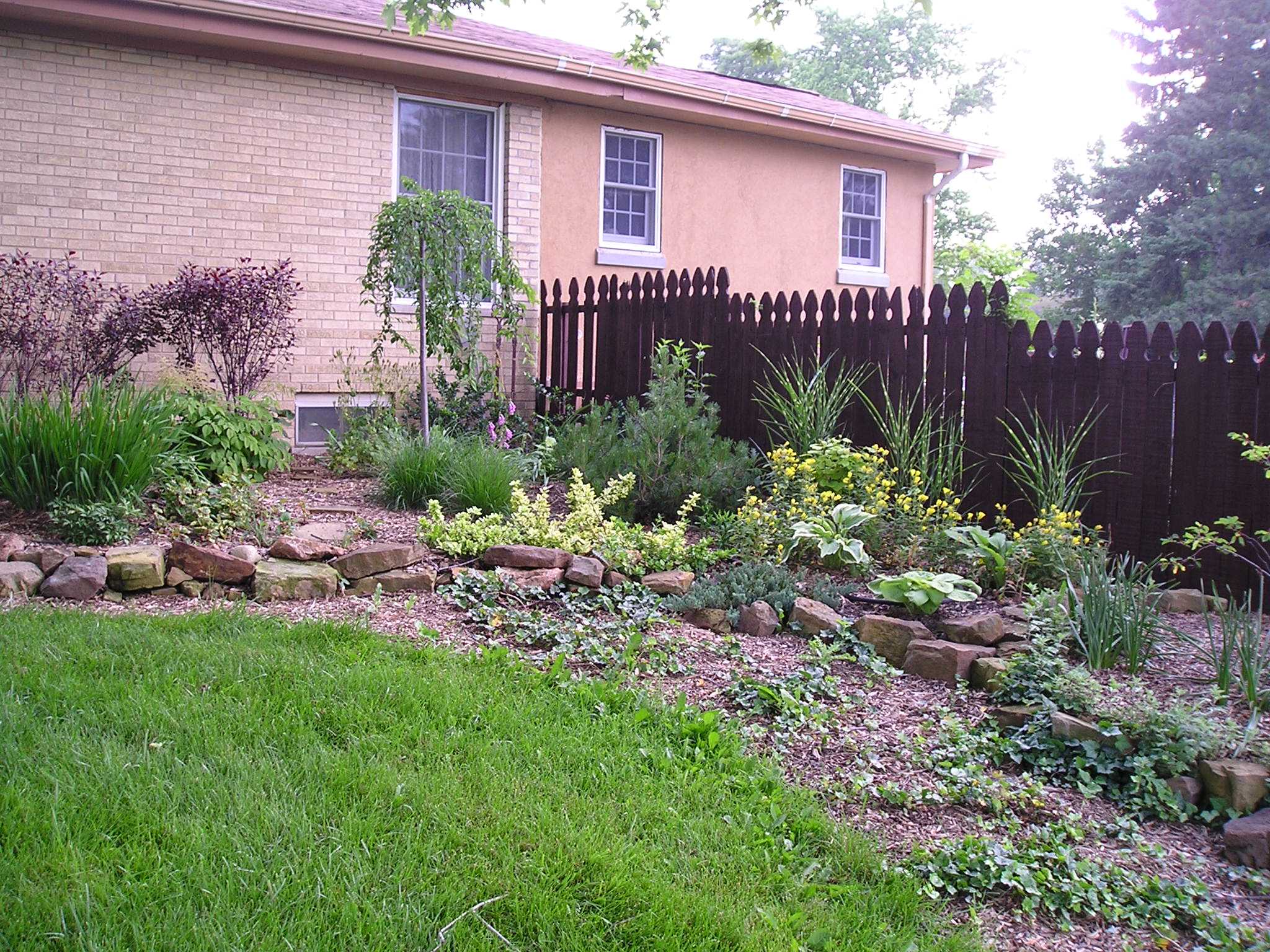
It started out well, but then doesn’t every trek to the dark side. Look how cute the “hout” is and how seemingly well thought out the area is.
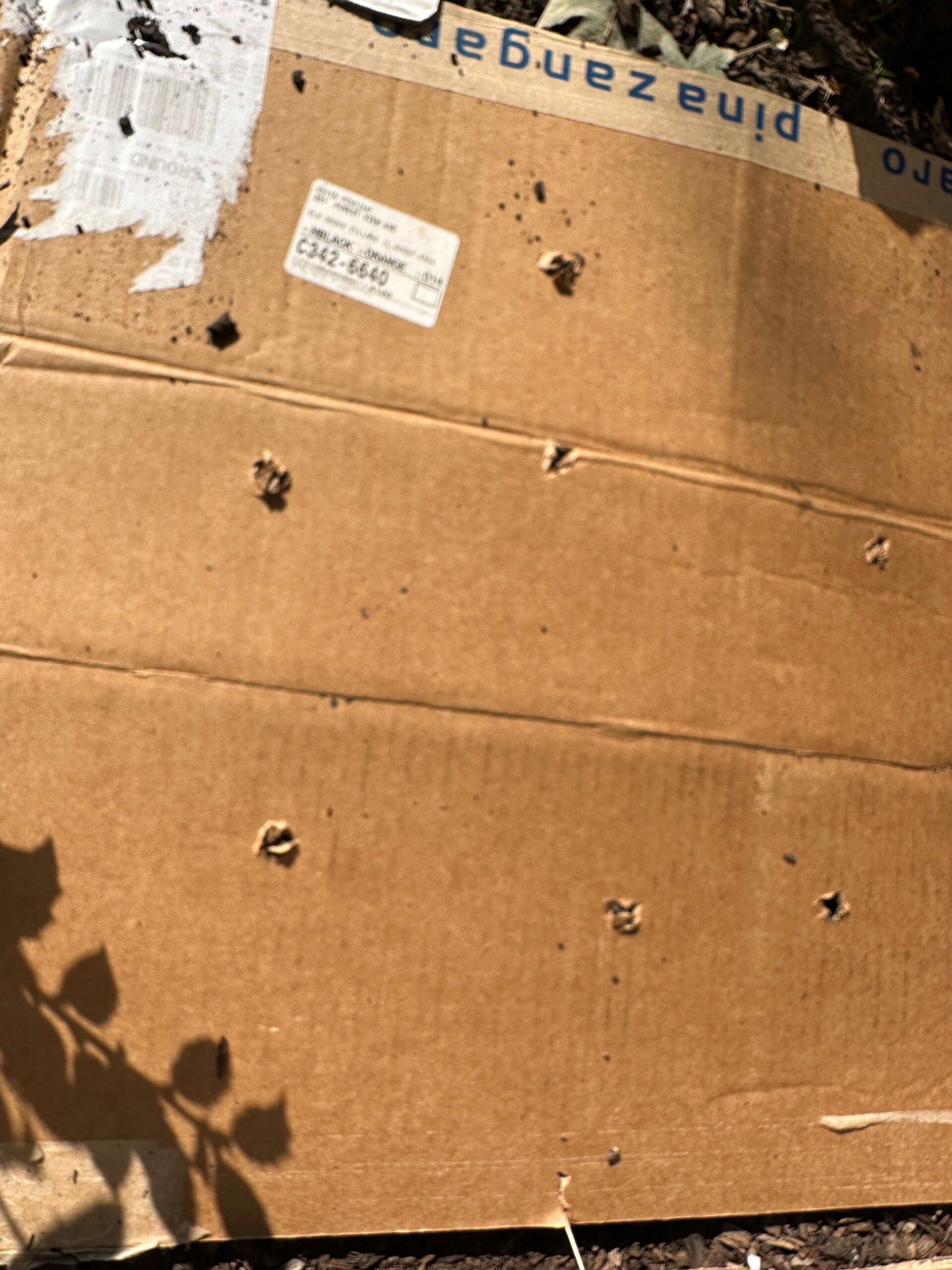
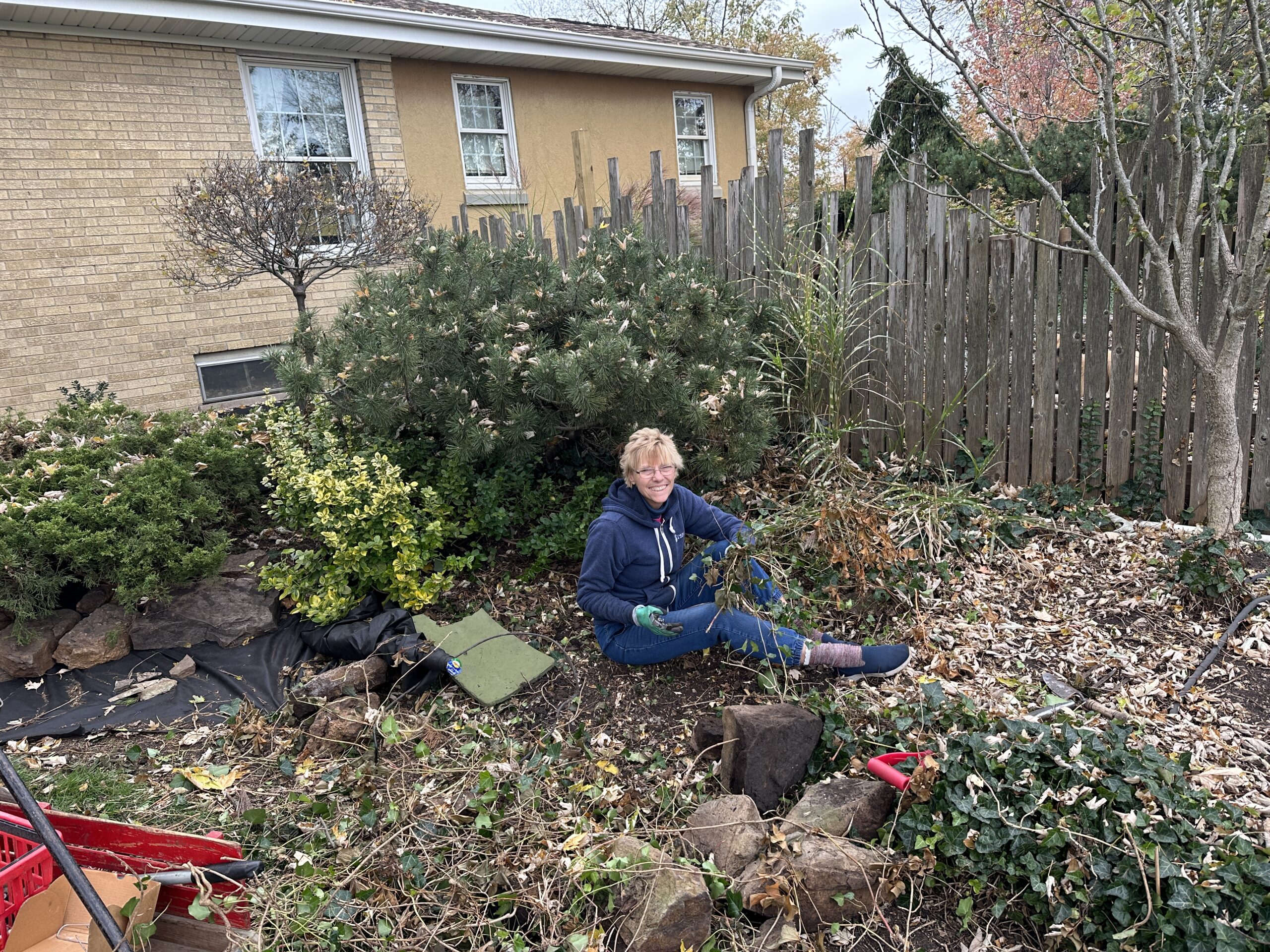
The invaders had to go. Mike finally took matters into his own hands last fall, and I joined in with a vengeance. It was “Do or do not. There is no try.” We opted for “Do”. He chopped away at it all, and once it was to the ground it was my turn. Cardboard covered by landscape fabric everywhere.
It was grueling. I had to become one with the force. If only I had droids. But no, it was me crawling under bushes, chopping and pulling more roots, adding the cardboard and landscape fabric, and redoing the rock border that you couldn’t even tell was there. I look happy in the photo but it was really hard work.
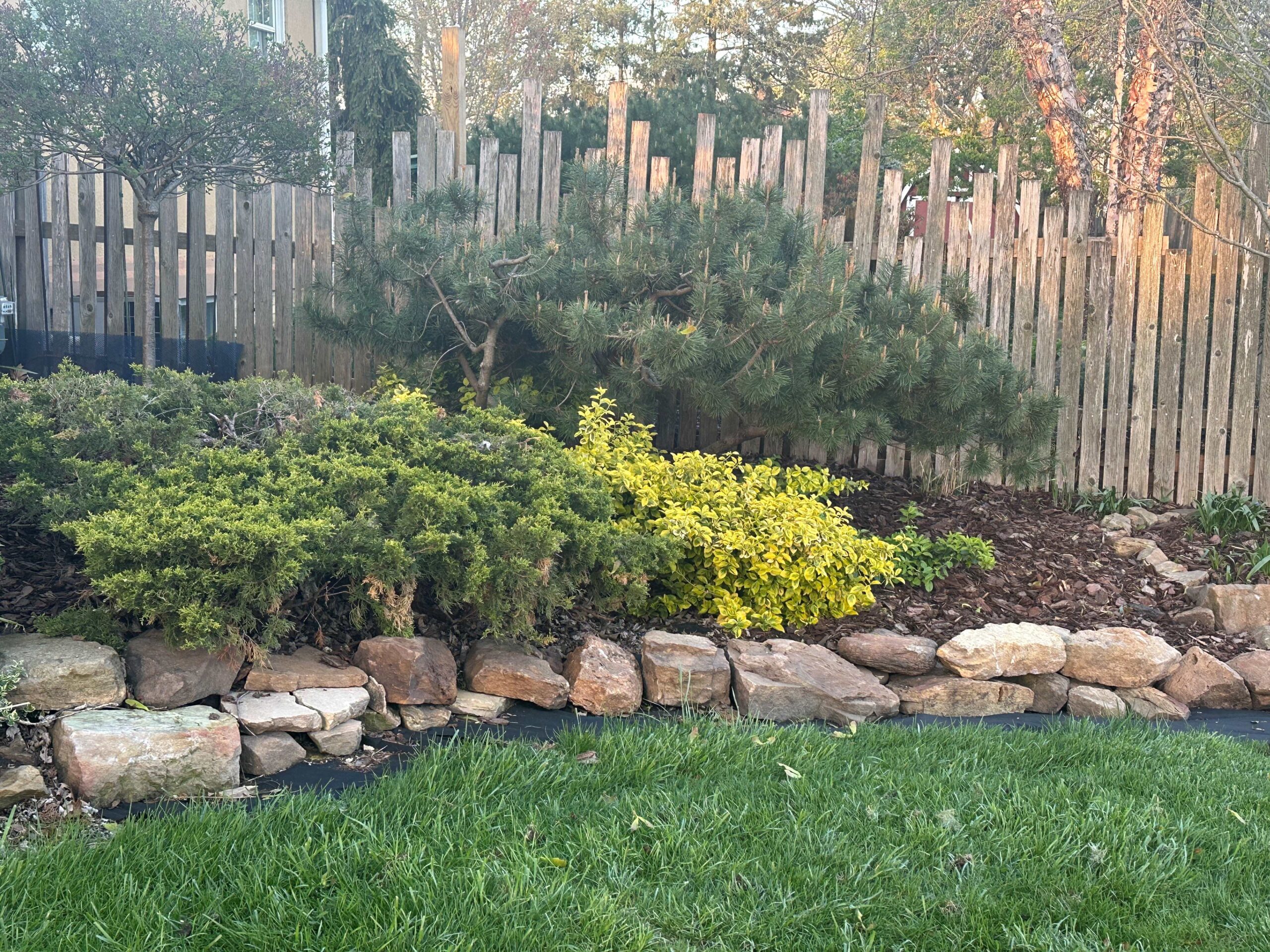
This spring, we covered it all in pine bark, not mulch. We aren’t planning to plant more in the area so I am so very not interested in mulch as it does eventually break down. The pine bark is much more long lasting. Powerful we have become. It took 20 bags, but its done, and it will be done for a long time. Hello low maintenance!
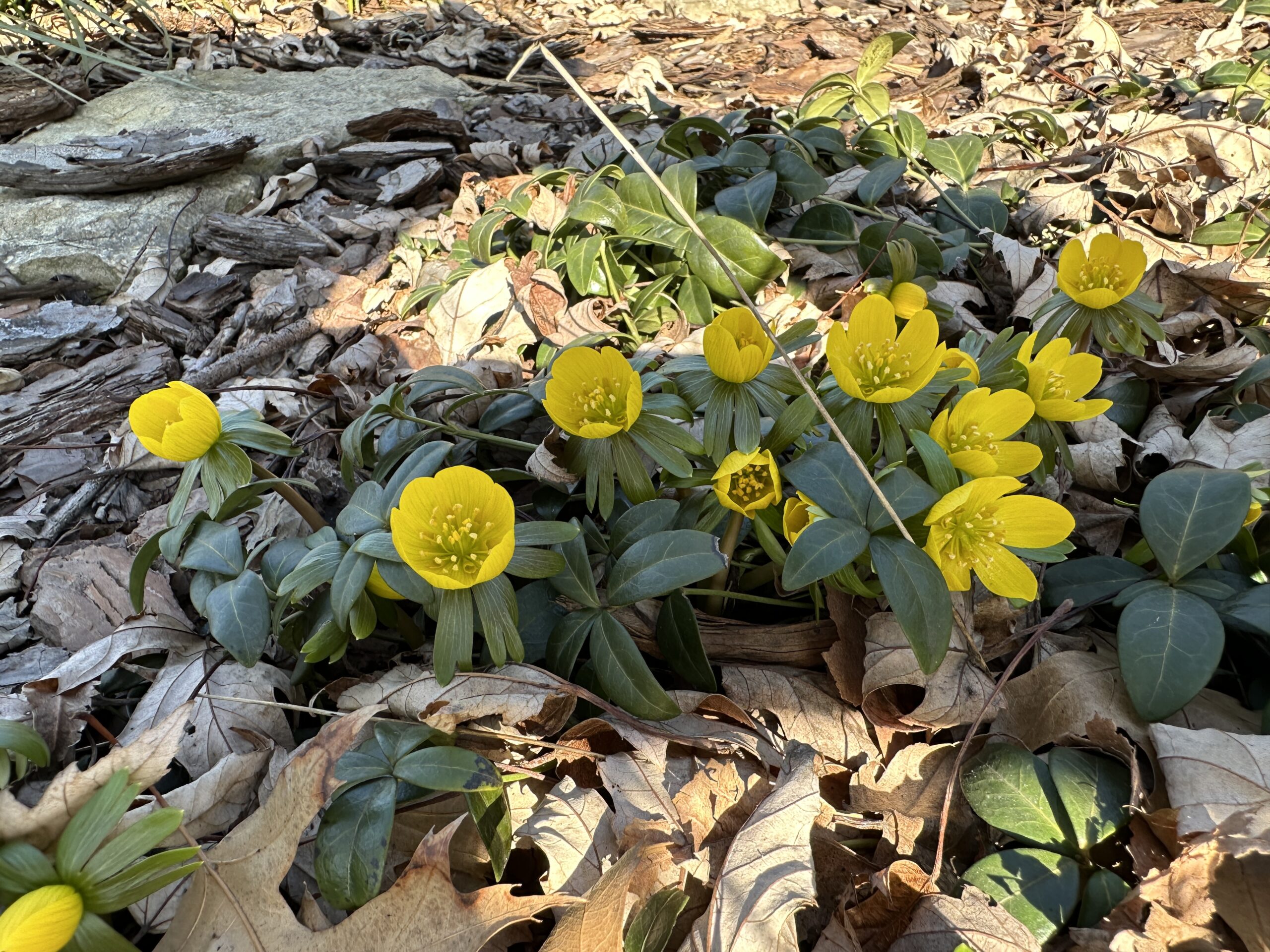
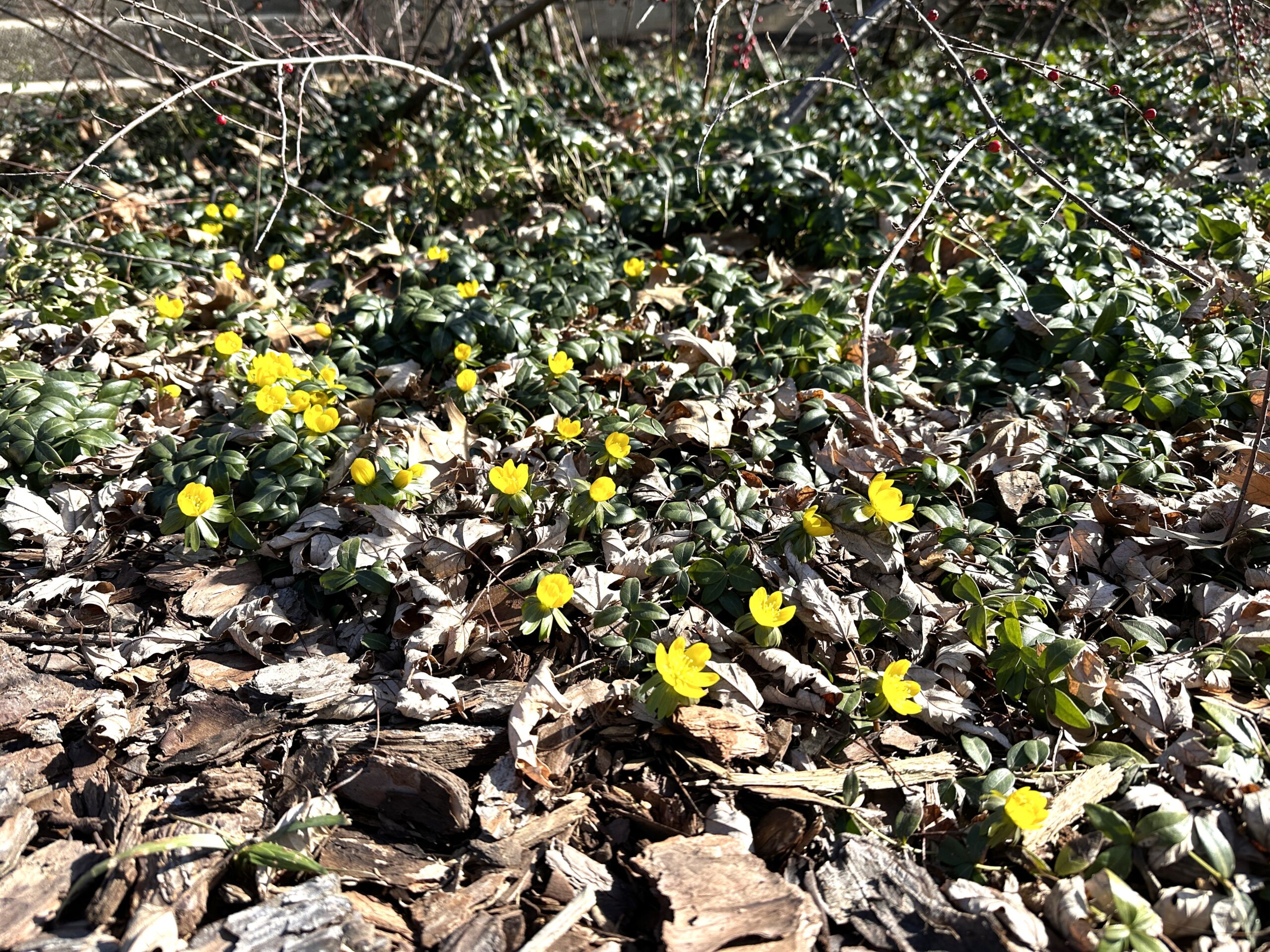
Amazing, just amazing. Its February 14th. I love in Chicagoland. That’s zone 5, or maybe 6 depending on who you talk to. And here I am with a whole buncha flowers blooming in my front yard! Its been such a warm winter that they are even earlier than usual.
Oh, there are lots more, lots. This is just a sampling.
The winter aconite lives amongst my vinca,. They are tiny, tiny bulbs that self-seed, which is great since they don’t go crazy with naturalizing and even if you get more than you want, they will brown out and disappear when the show is over. I’m actually hoping for them to move into the grass, and they will then “disappear” with the help of our lawn mower when Mike starts cutting the grass.
Officially, they qualify as an ephemeral. but to me, they mostly qualify as a gift!
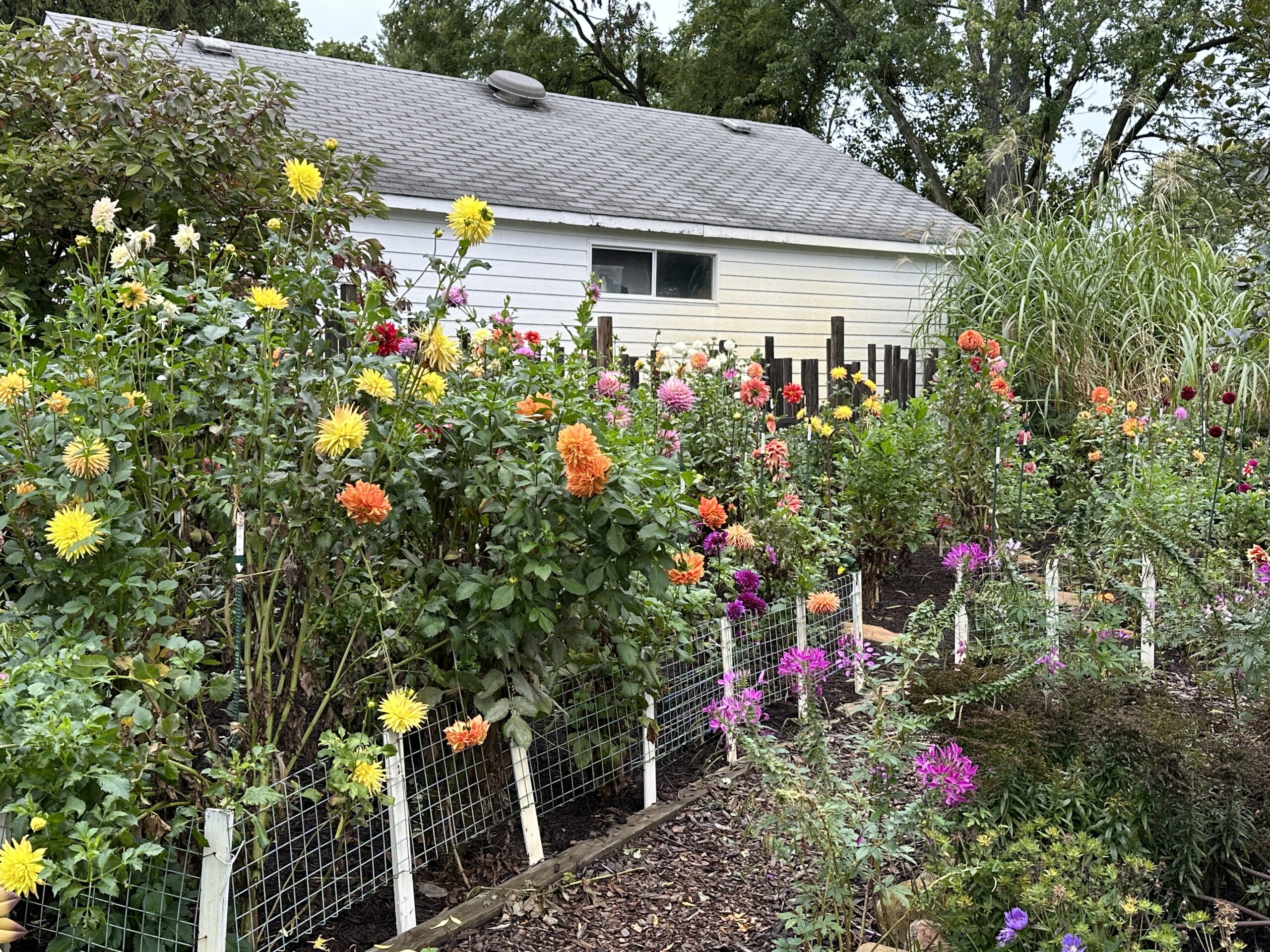
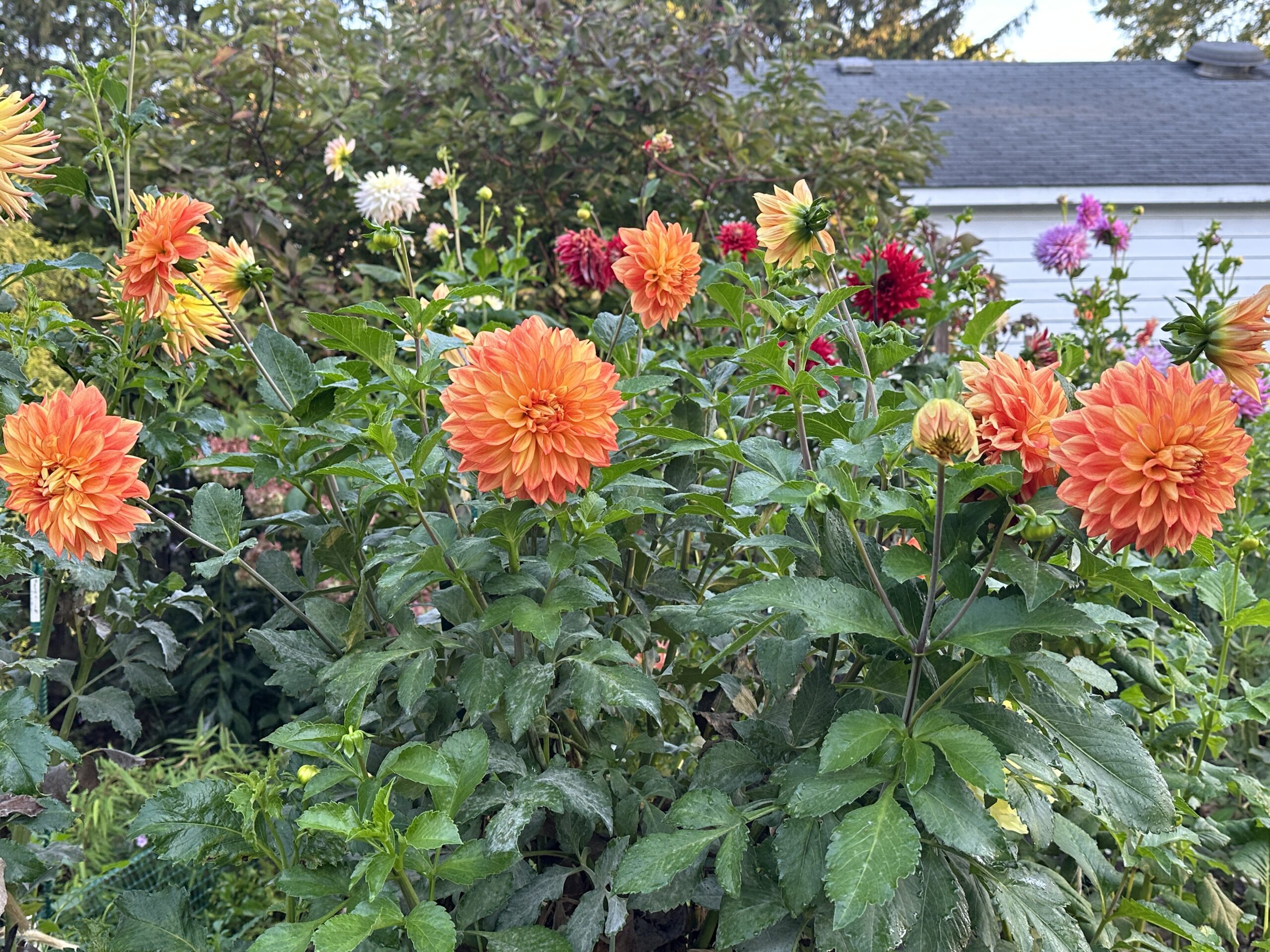
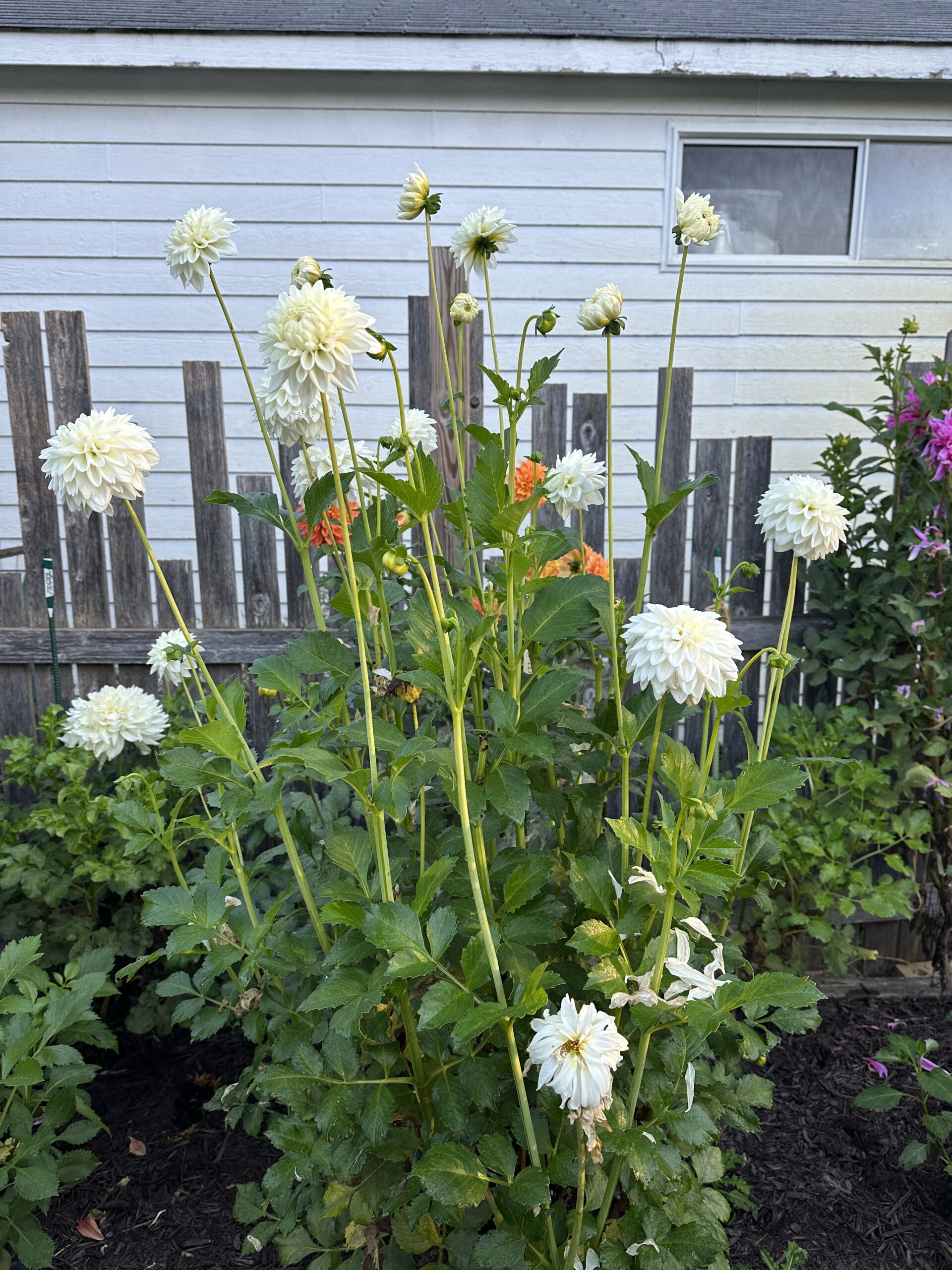
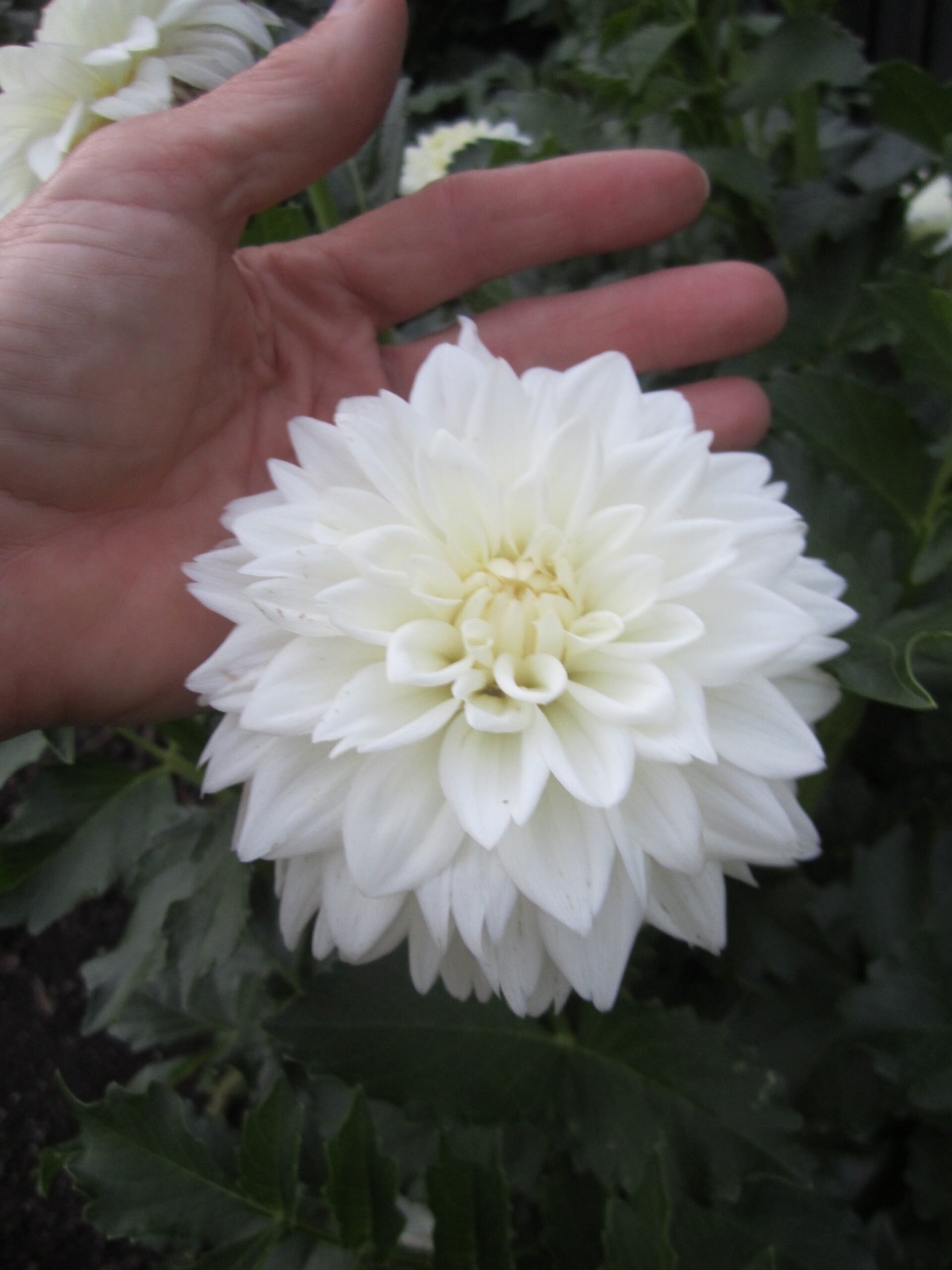
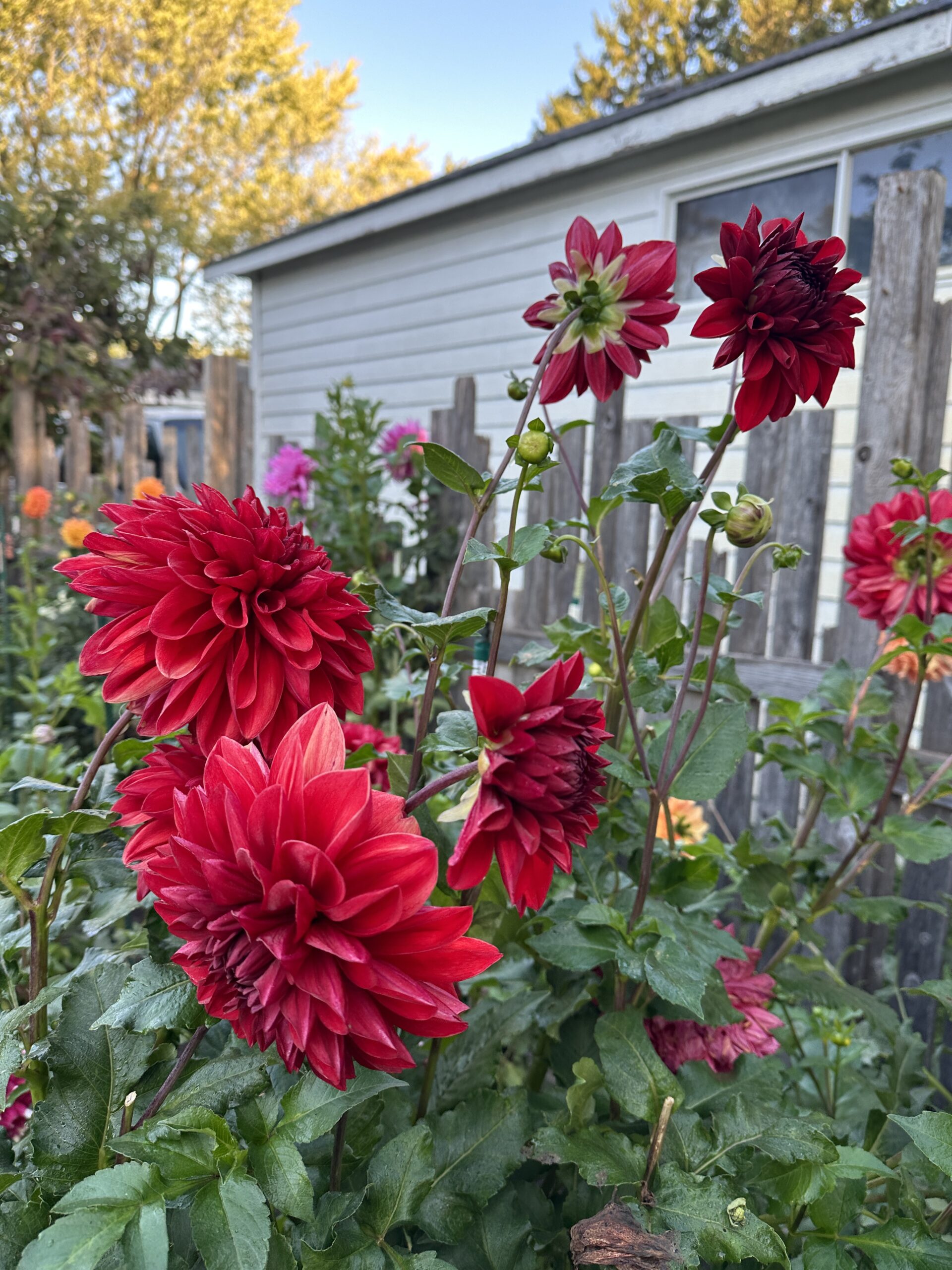
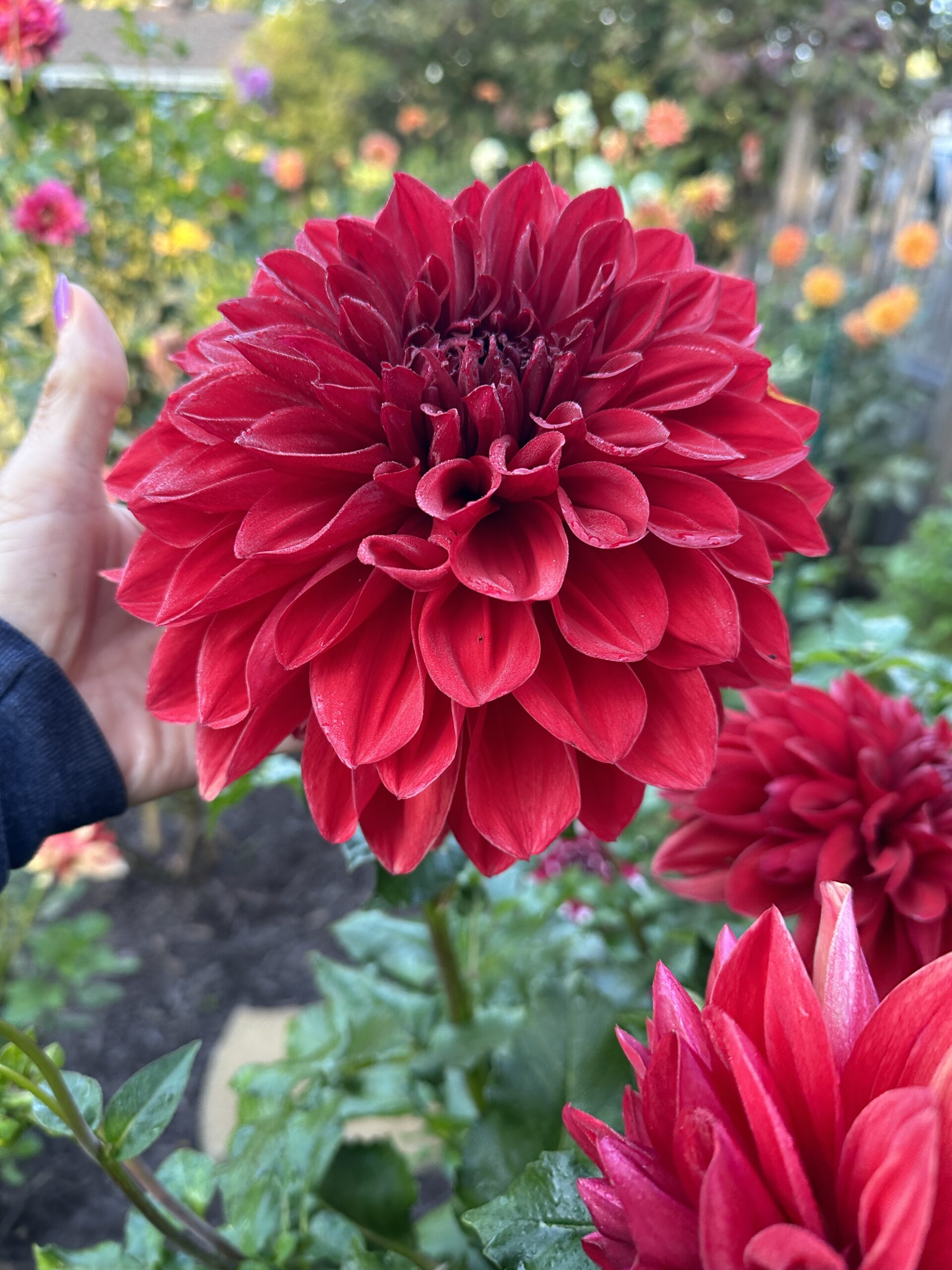
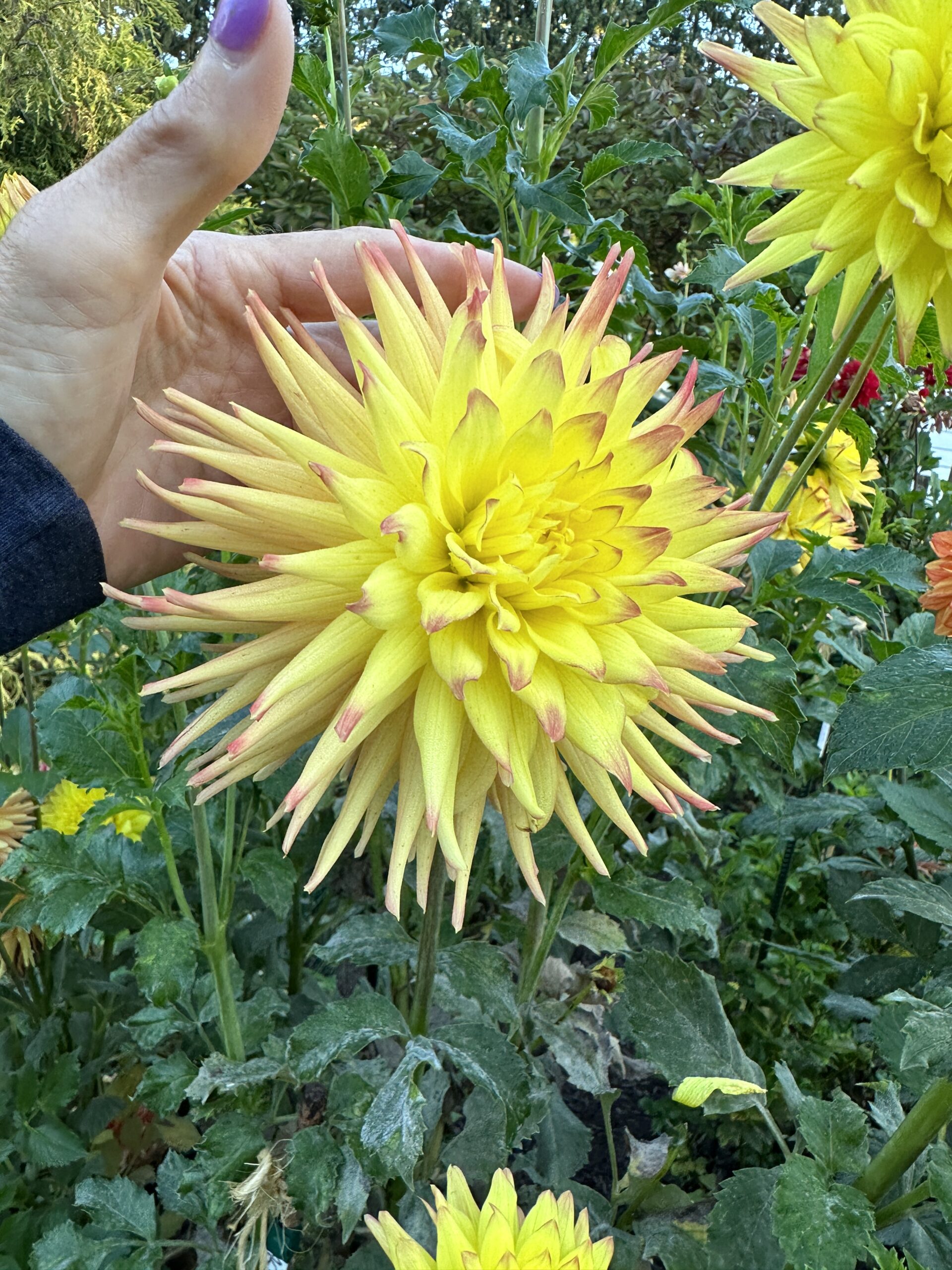
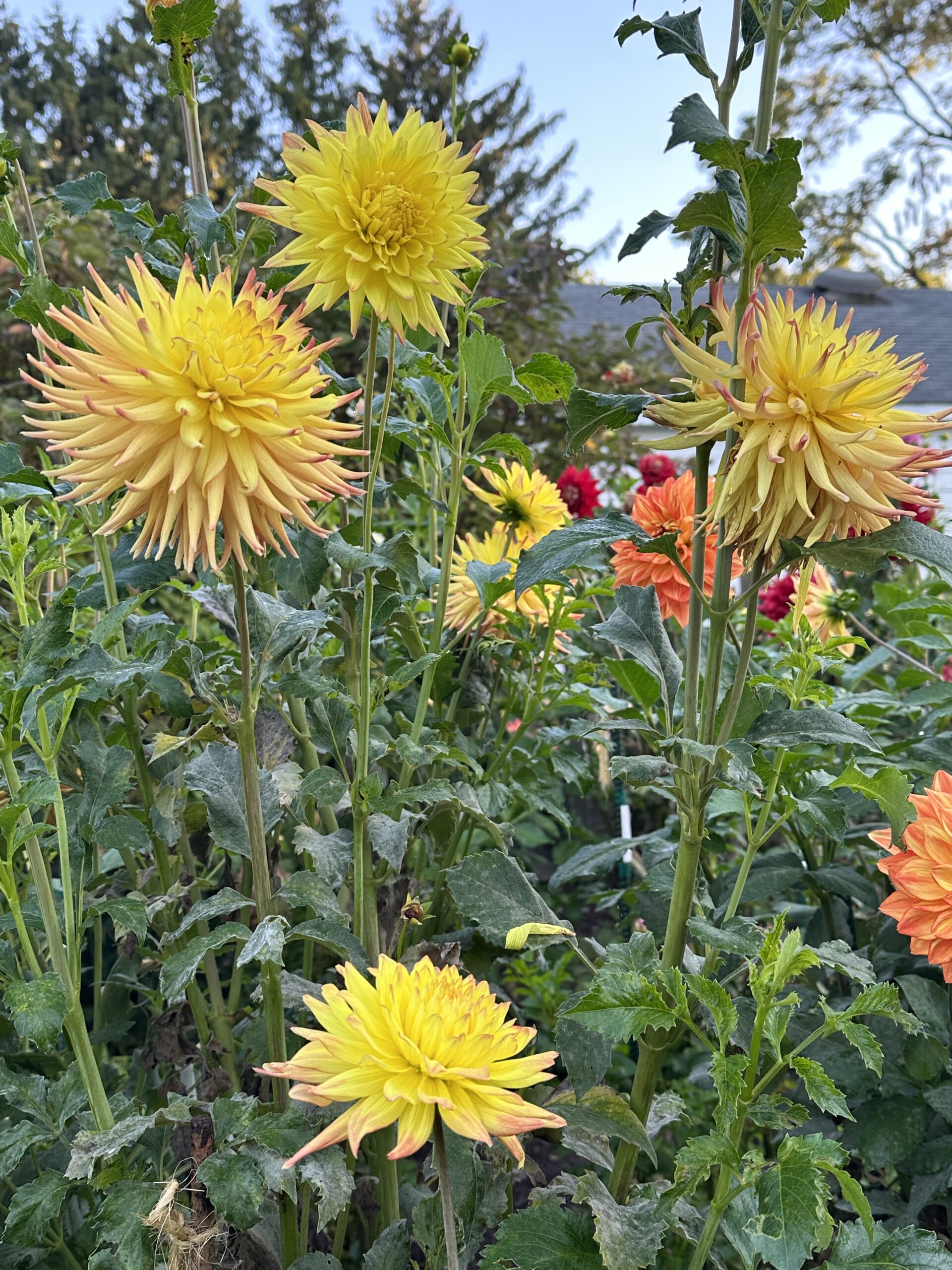
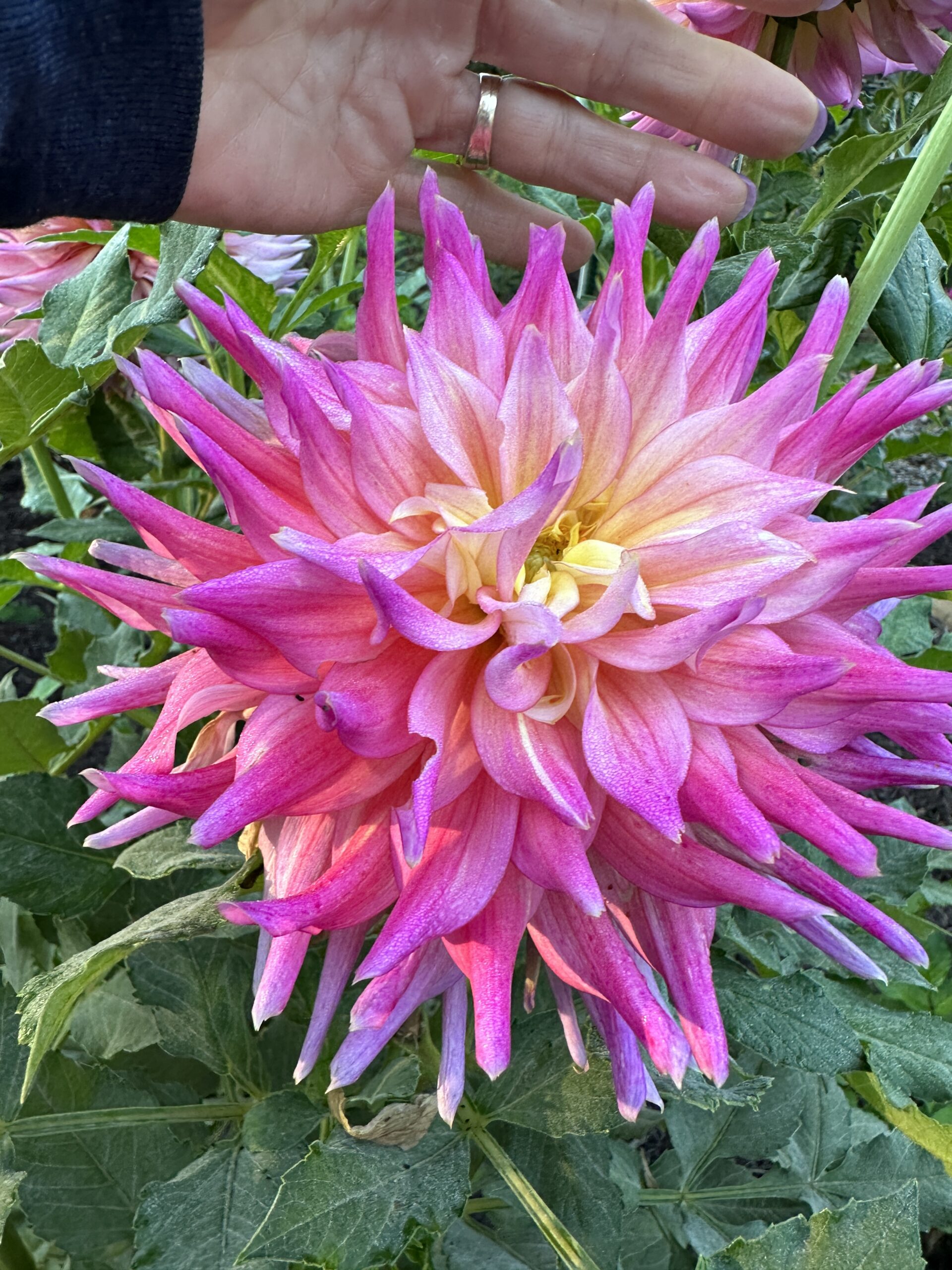
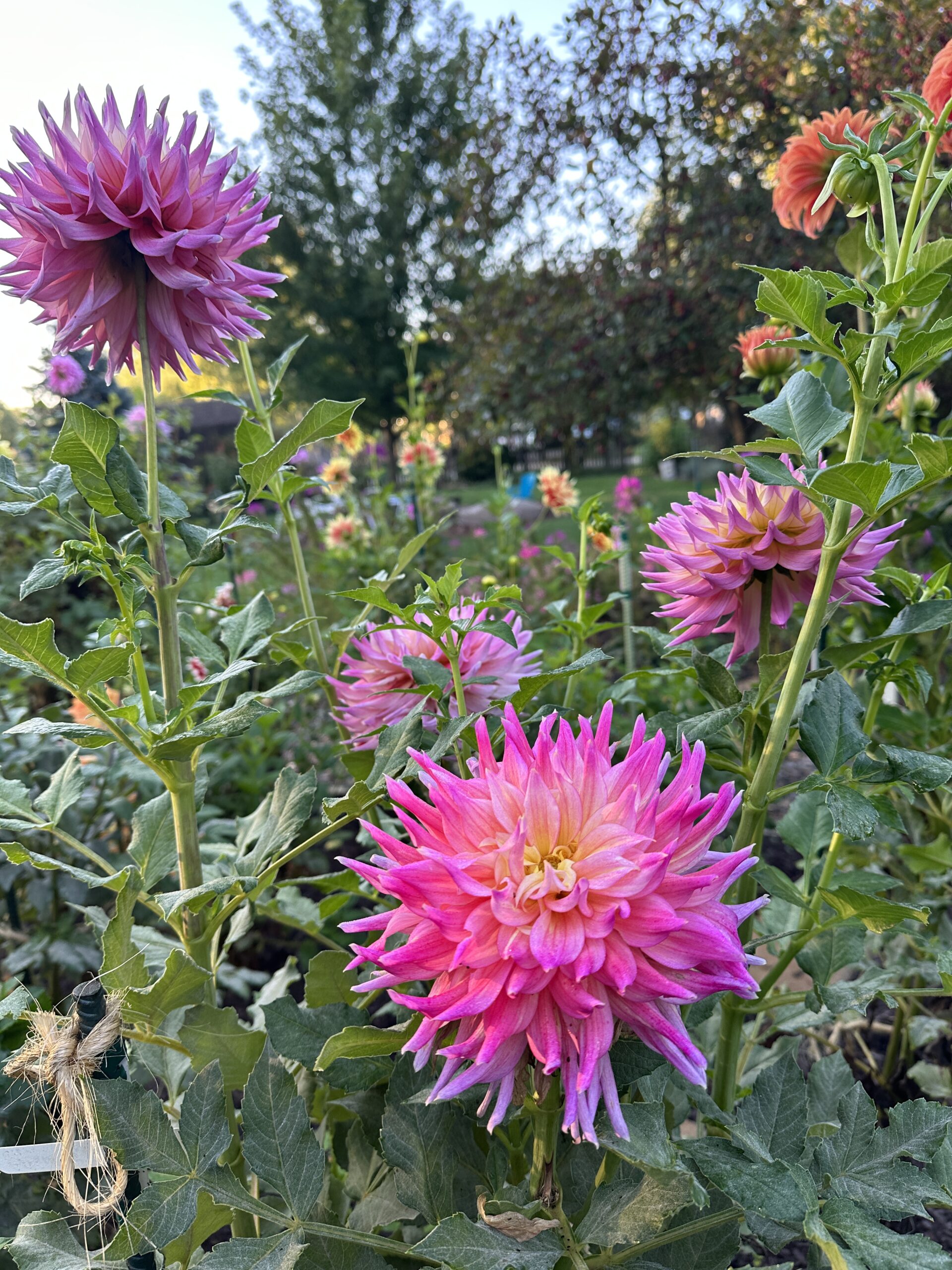
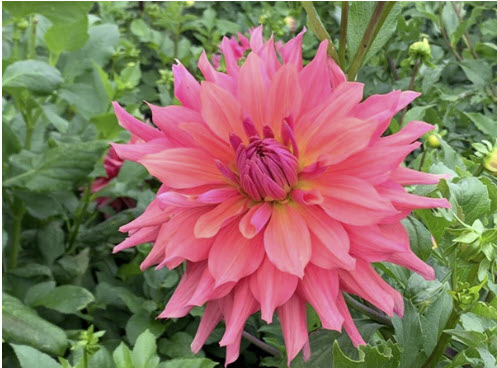
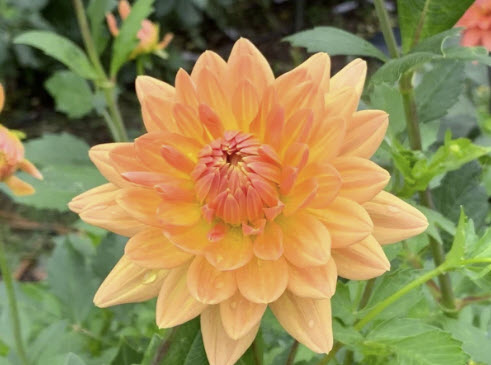
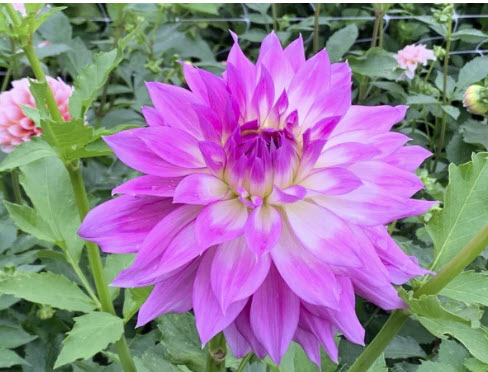
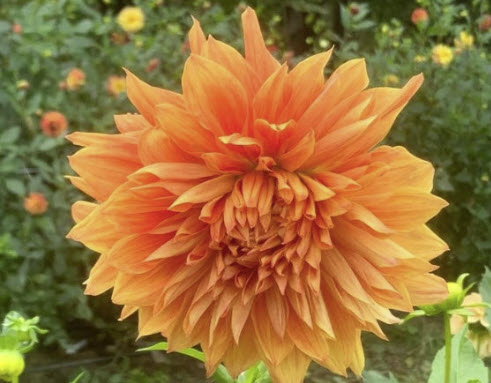
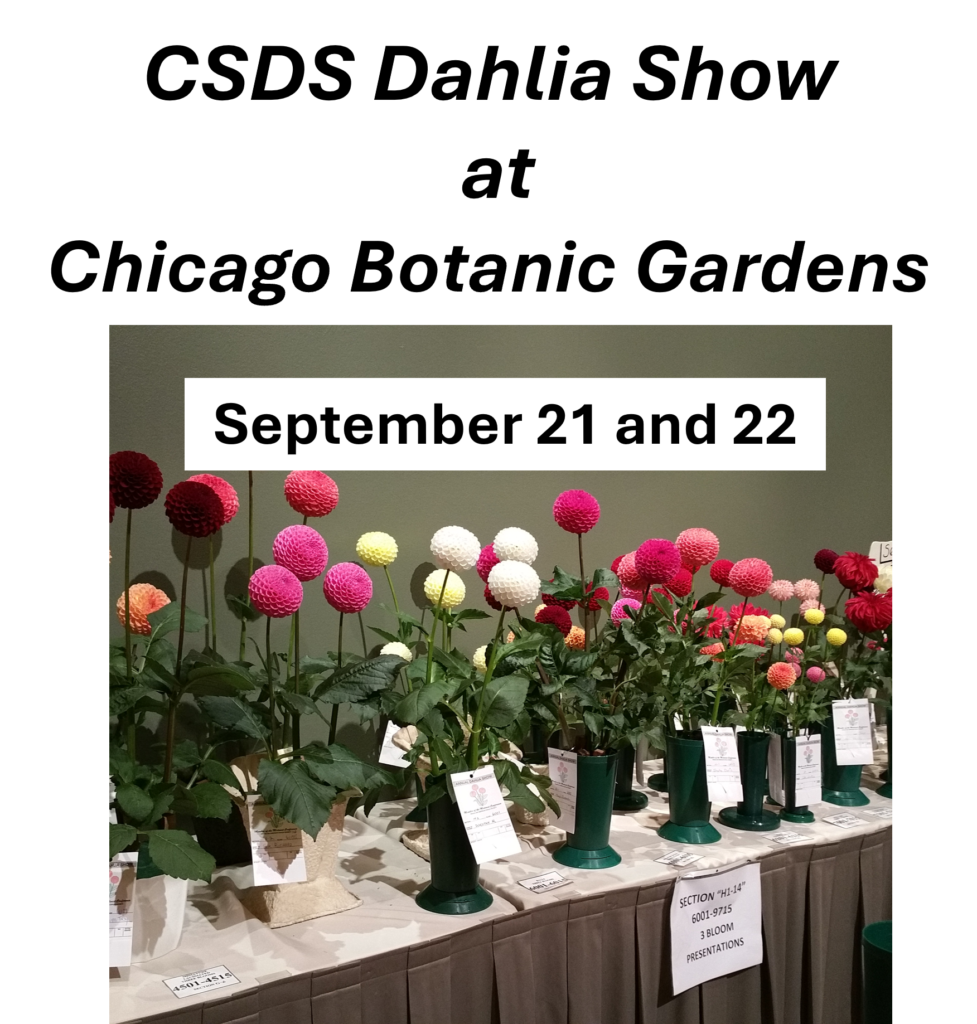
This year was definitely a competition for the dahlia in our yard that bloomed the most. There were a lot of contenders. As you can see, we did not lack for blooms this year. If you grew dahlias and they were less than magnificent, worry not. Some years are good and some aren’t. For us, it clearly was a great year. For our friend Joe, it wasn’t. All of these photos were taken in the last few days, so please do be impressed and envious.
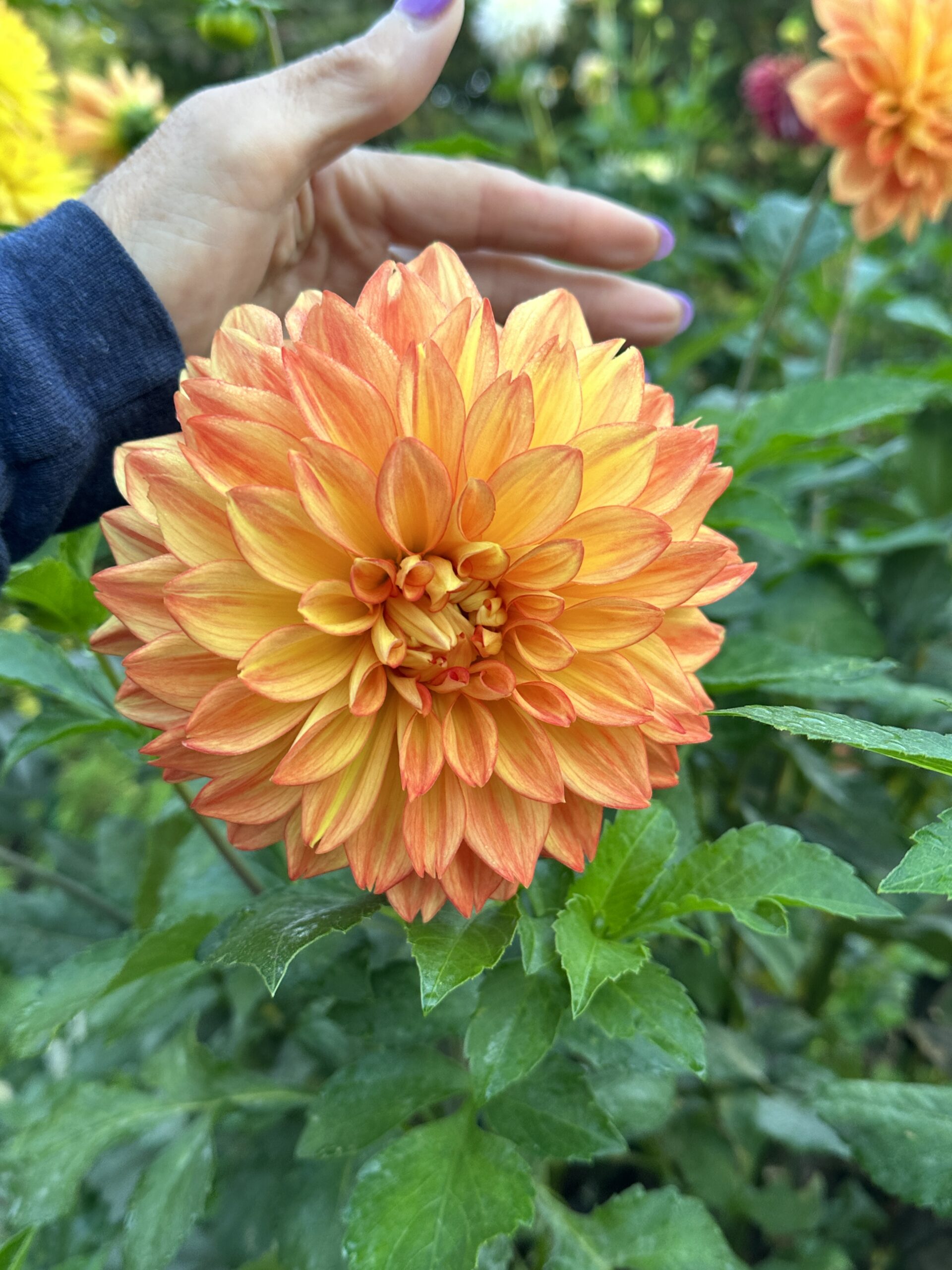
I’m gonna go right to the top of the list. Wynn’s Neon Splendor was a new dahlia for us this year, and Mike actually planted 3 of them. We try not to do a lot a duplicates as there are so many that we like, but somehow we got 3 Neon Splendors. I guess God knew we would like that one. How can we not? Look at that symphony of colors. Plus, it just bloomed and bloomed.
Blizzard is a perennial favorite. OK, I used dahlia and perennial in the same sentence. Dahlias are NOT perennial here in Chicagoland, but we do plant Blizzard every year and we can count on it to do this.
In no particular order, I present Drummer Boy. If I have spoken to your garden club about dahlias, you know that Drummer Boy is a favorite of mine. Here you can see just how pretty it is, and that we have many blooms.
Another new dahlia for us is AC Shell.
Oh what the heck, one more. This is Clearview Pastelle.
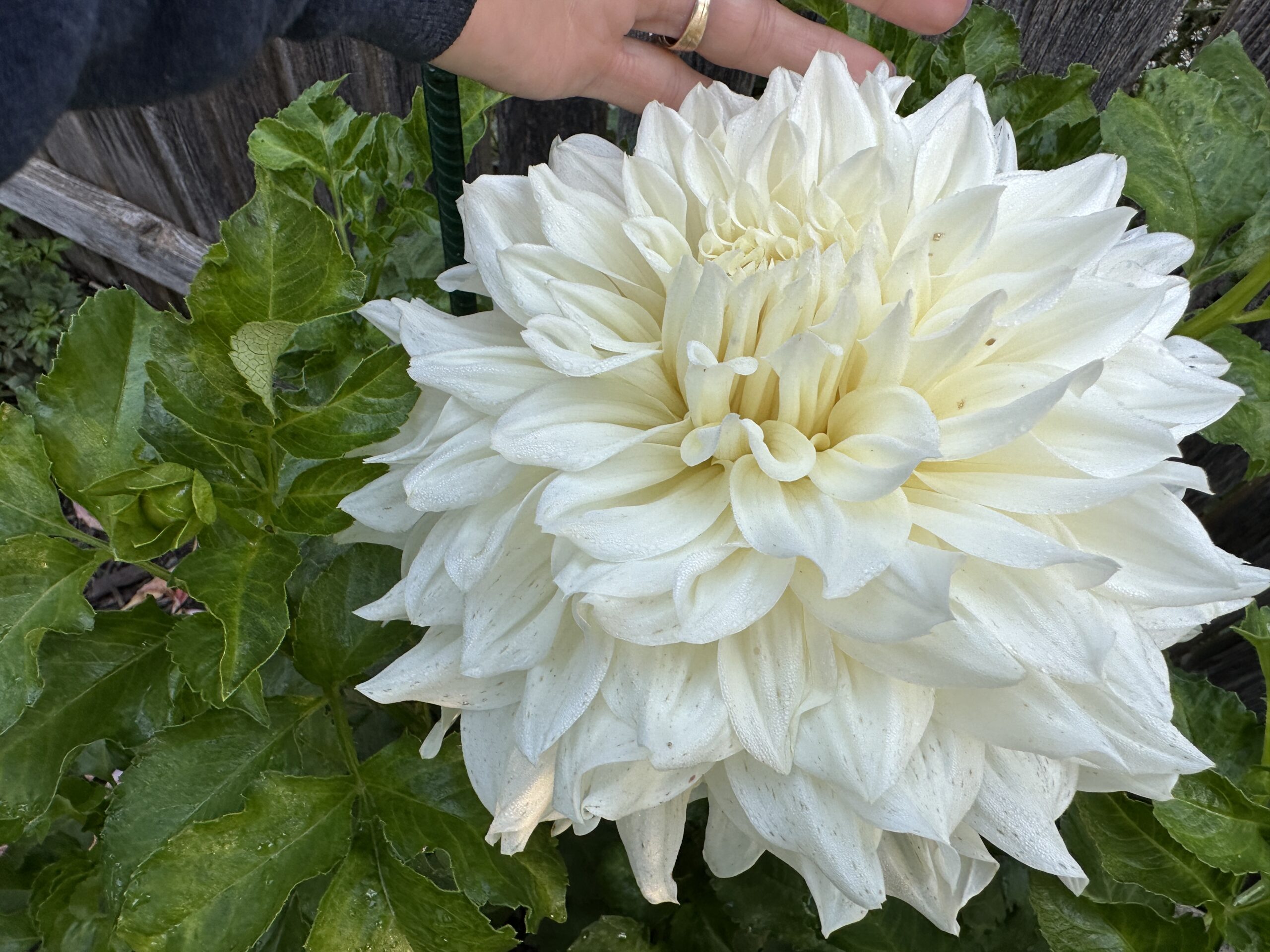
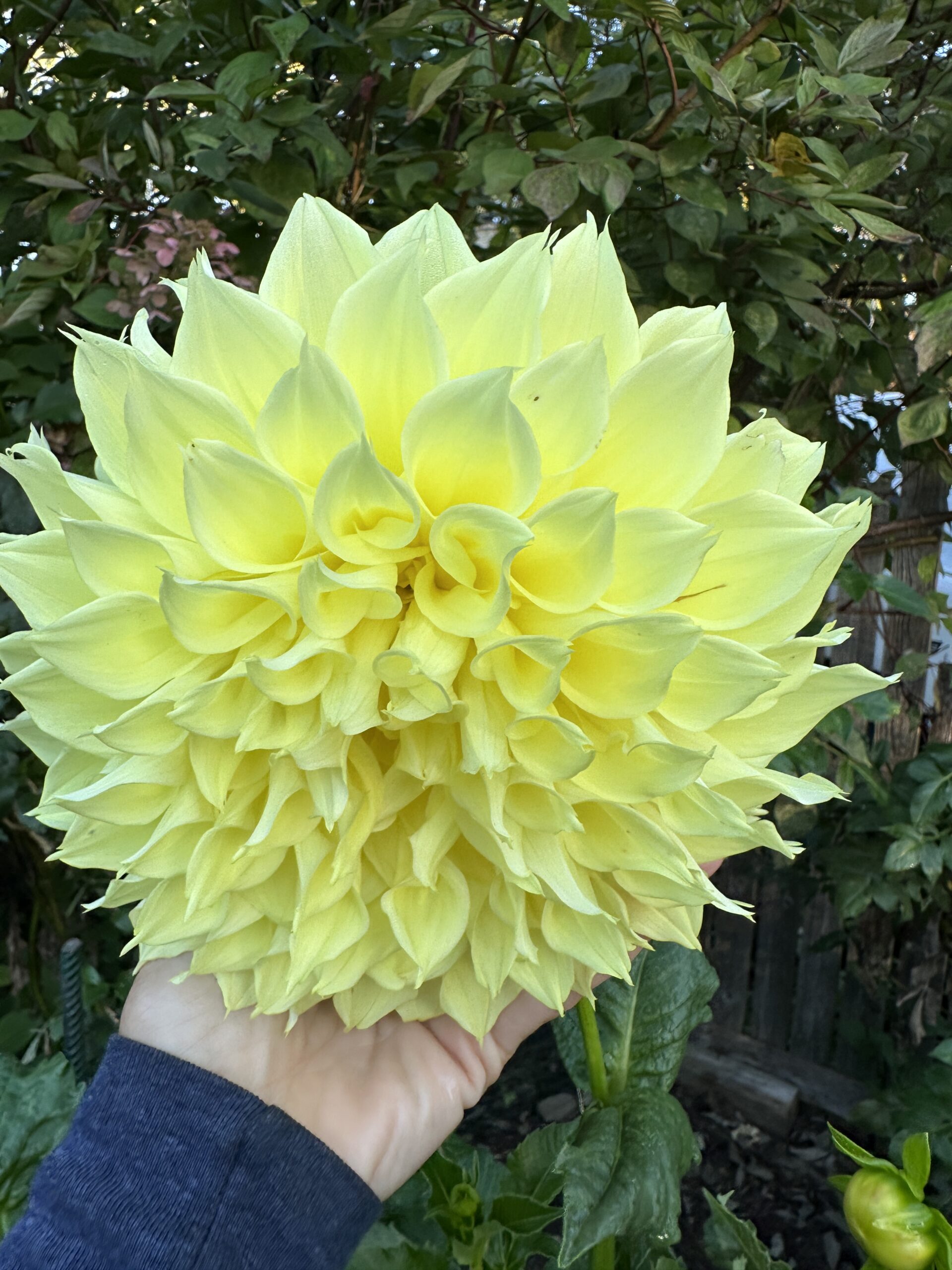
You may have noticed, the winners are not the large dinnerplate dahlias. That is typical as the largest dahlias do tend to have fewer blooms. For example, two of our big ones this year were ones we grow regularly, Hakuyu and Kelvin Floodlight.
Any size, shape, color, form could be your favorite…if you can pick just one. We can’t.
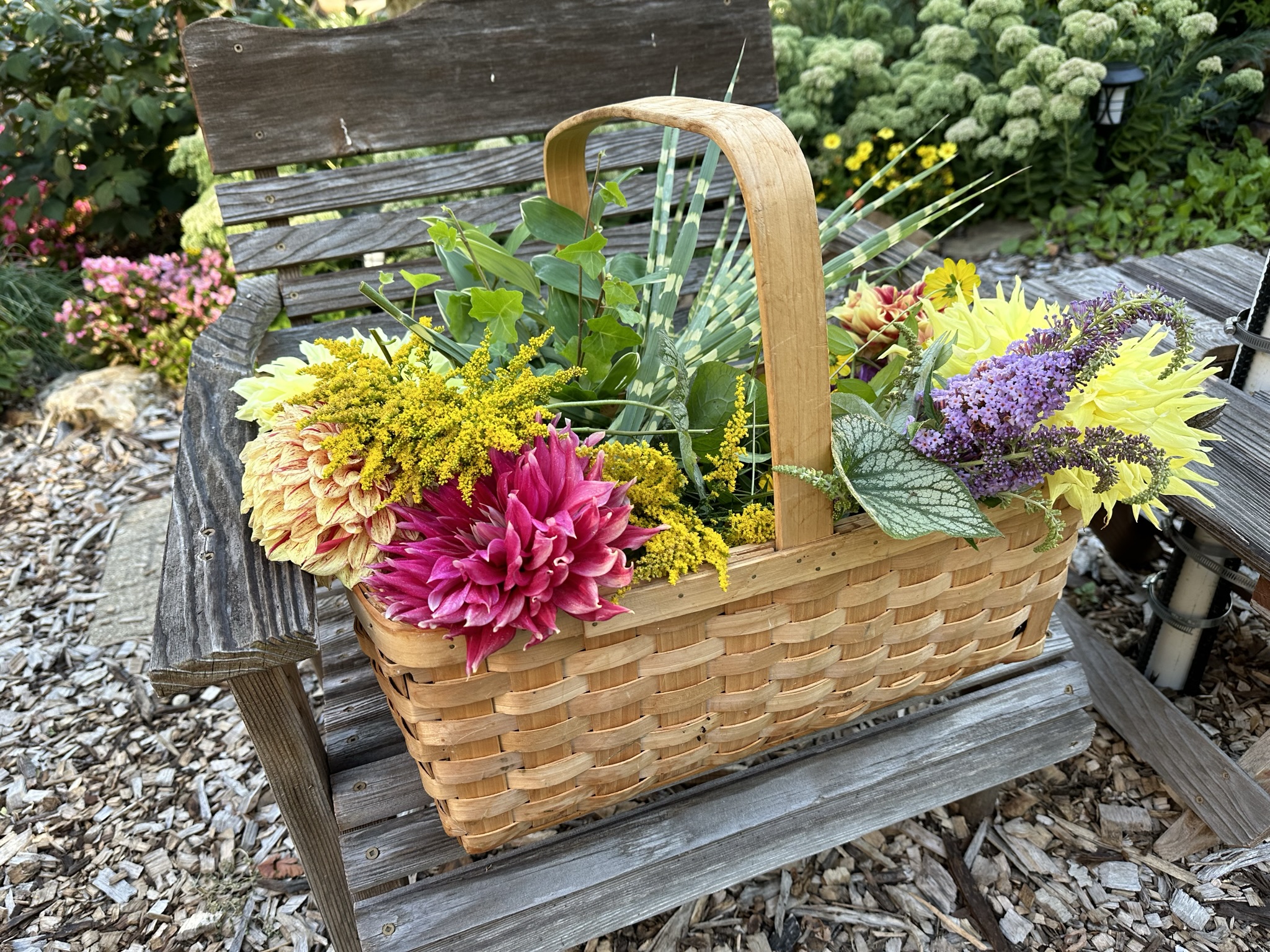
Yes! Its time for our dahlias to take center stage. I spoke for the Potawatomie Garden Club in St. Charles and made 6 vases of dahlias to share with them. Finally, I am out in my garden with the preverbal basket gathering blooms.
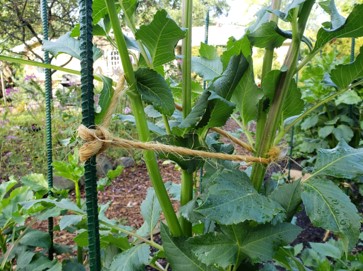
Of course, later in the day, it was back to business as usual. I had 65 dahlias to peruse and make sure they were all well secured to the rebar with twine. Gotta do it or those September gusts of wind and rain will take ’em down. A big hug will do, so I wrap the twine around the whole bush. No need to fuss and do individual branches.
It’s a time consuming task for us, but it is worth it. And of course, if you have just a few dahlias, it will take only a few minutes. We try, but the task does sometimes get away from us. Here is Mike when we missed a few one year. That is one sad face.
So out you go. Now. It is time to make sure your dahlias are tied up to the stake!
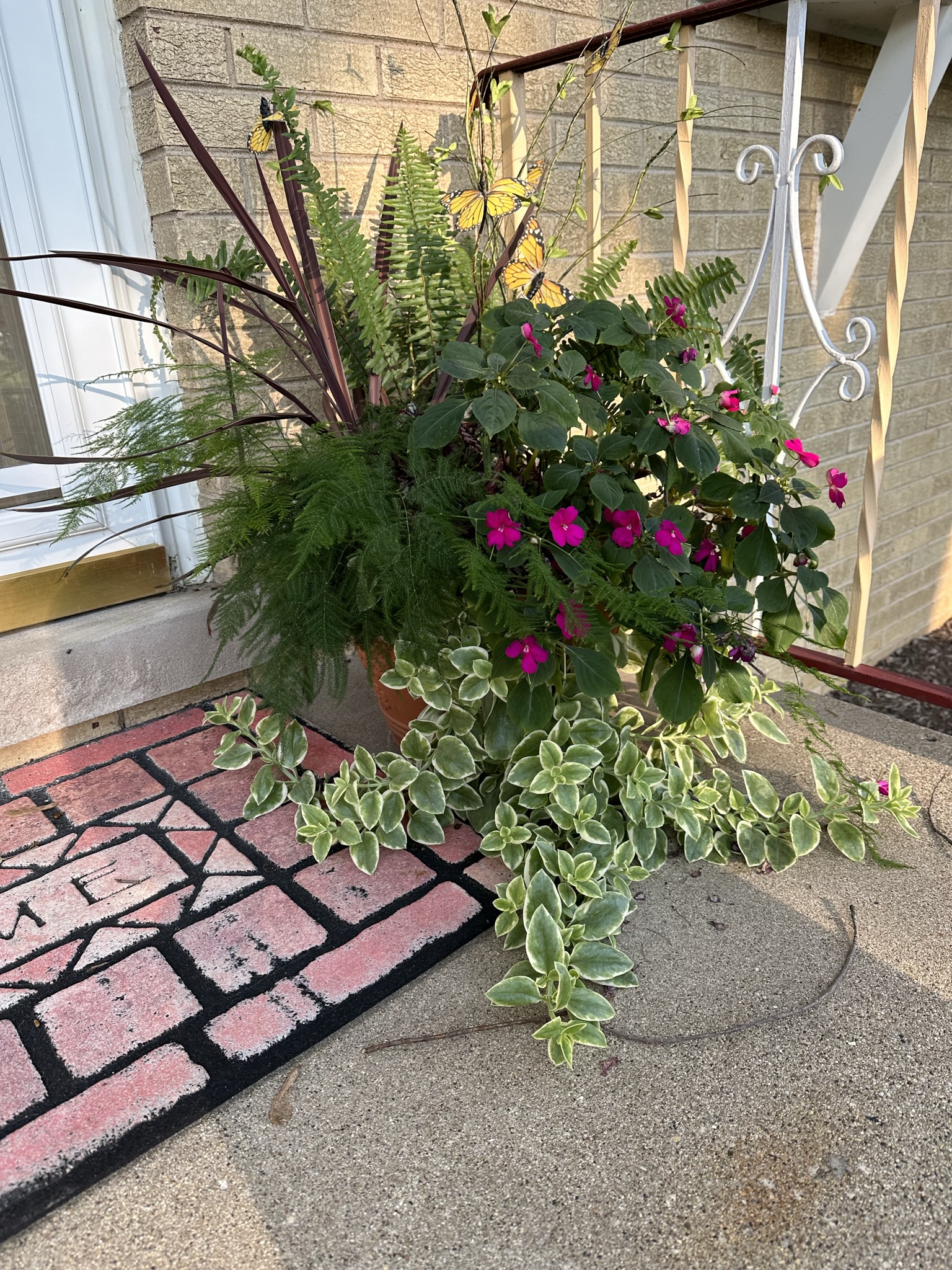
It’s here!! If my garden were a tv channel, this would be prime time during sweeps week. The best of the best of the best out back for our viewing pleasure during breakfast. Except for this one bountiful basket, it’s out front. That one is compliments of the Elk Grove Garden Club’s raffle in May. It already looked good then, and now it’s outstanding and also out standing on my front porch.
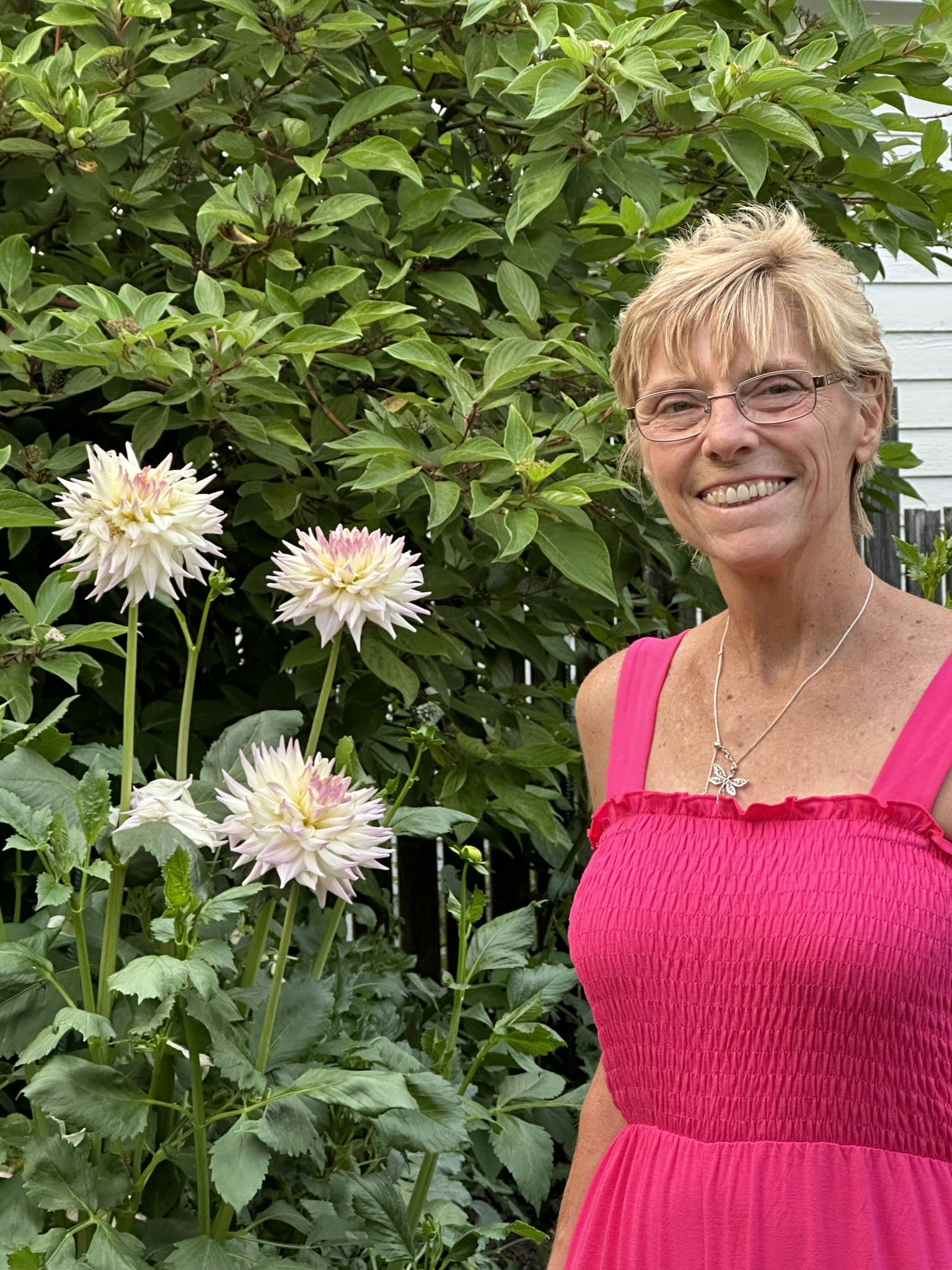
Moving to the back yard, well, I hardly know where to begin. I know! The dahlia garden. It has its first blooms. No, the one in pink isn’t a flower, it’s me. The dahlia garden will be bursting with blooms soon. For now its bursting with buds.
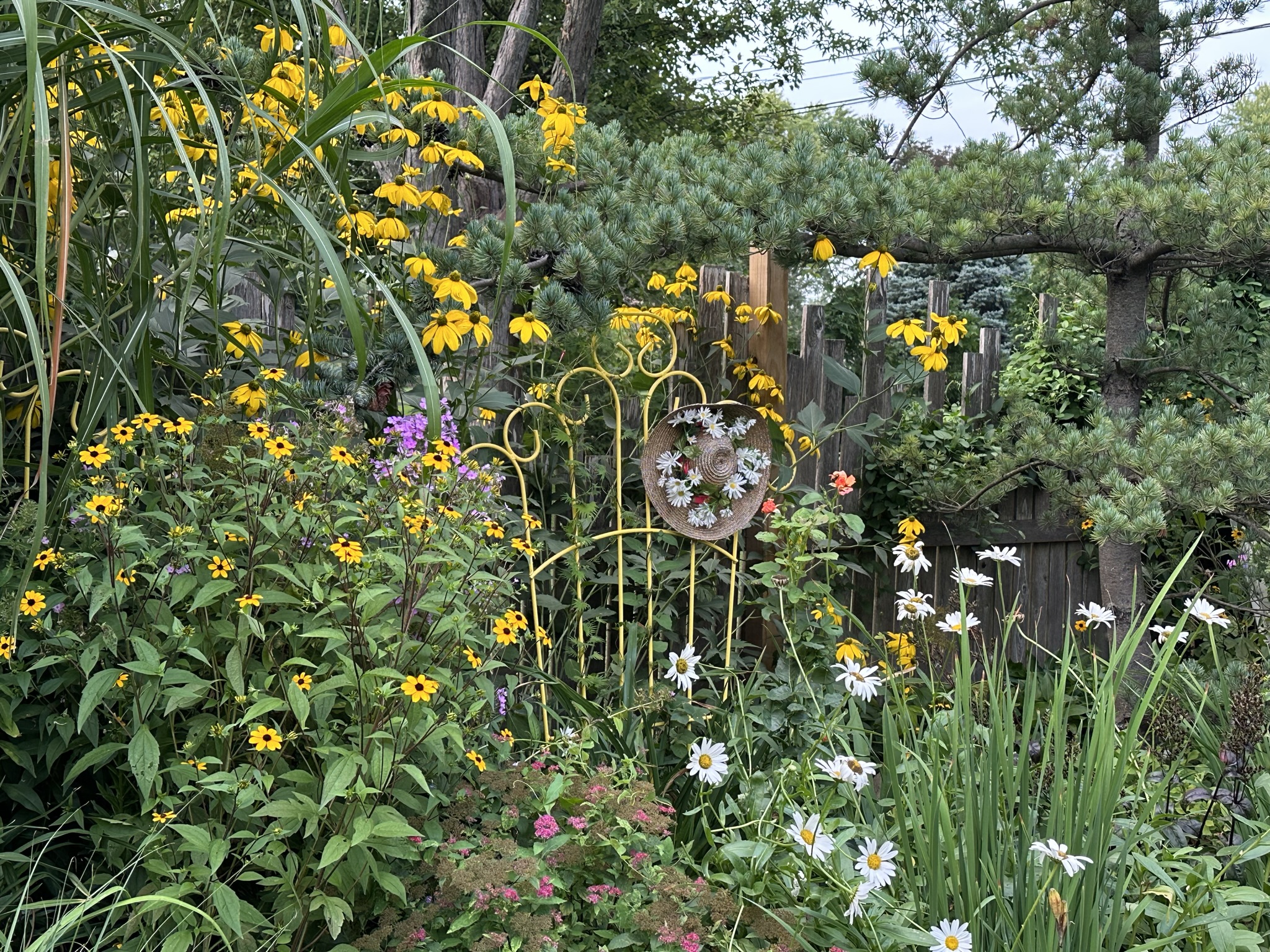
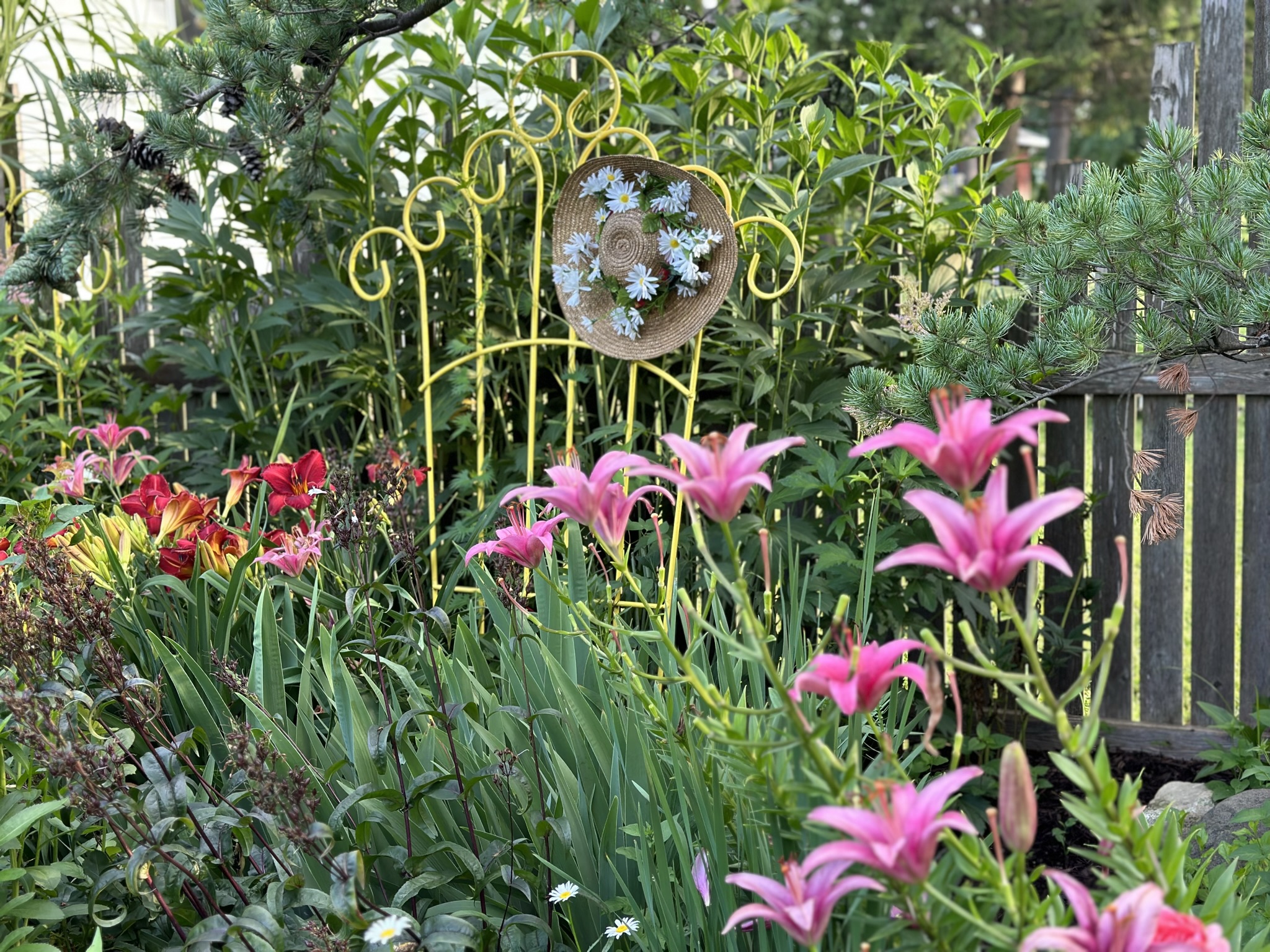
The trellis with the hat is always one of my favorite spots. Today it screams abundance.
A few weeks ago, it also screamed abundance, only with day lilies and Asiatic lilies.
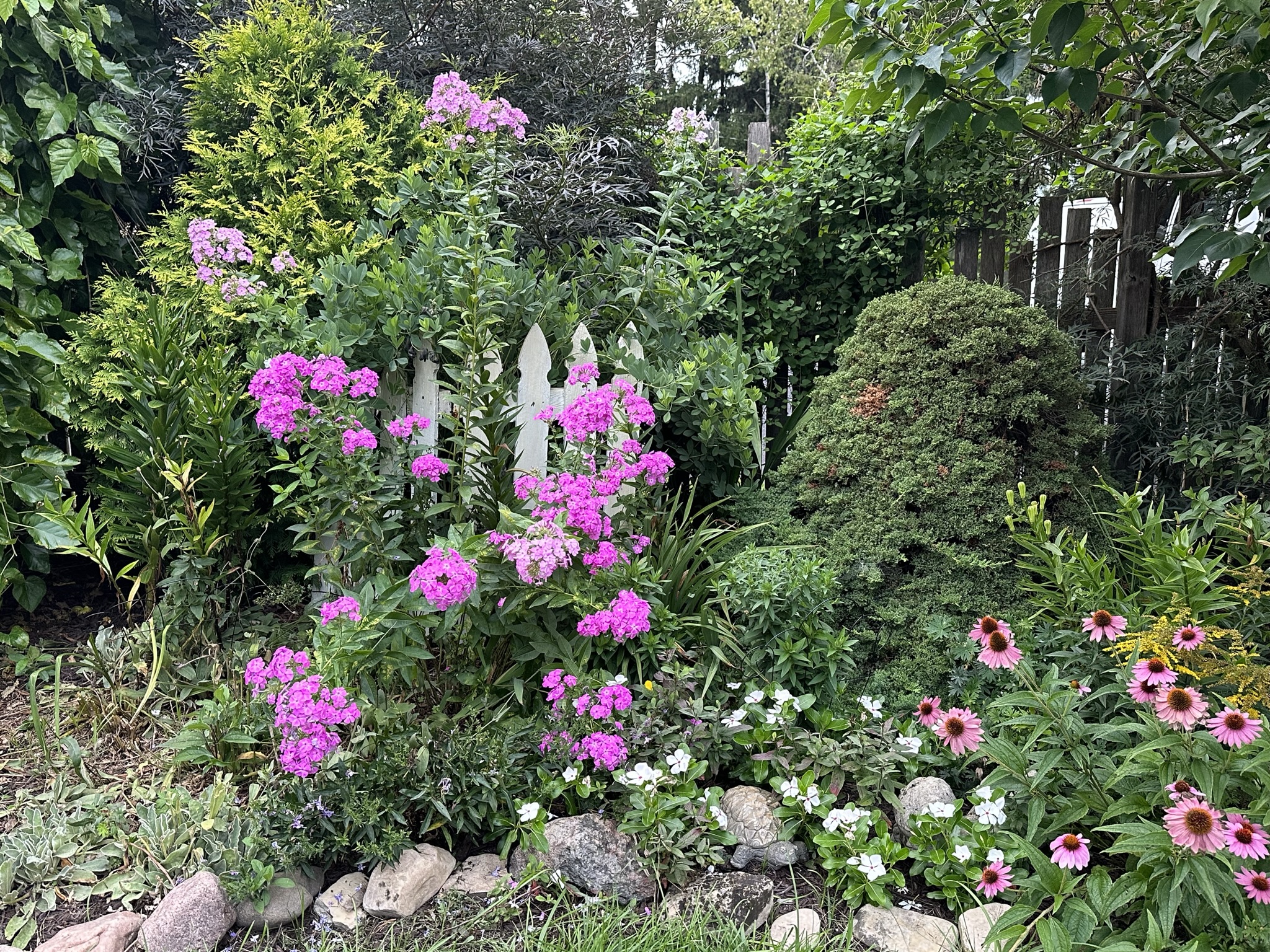
In theory, I refuse to grow this phlox, it’s sooooo invasive. In reality, I let a few grow every year. I just can’t help myself.
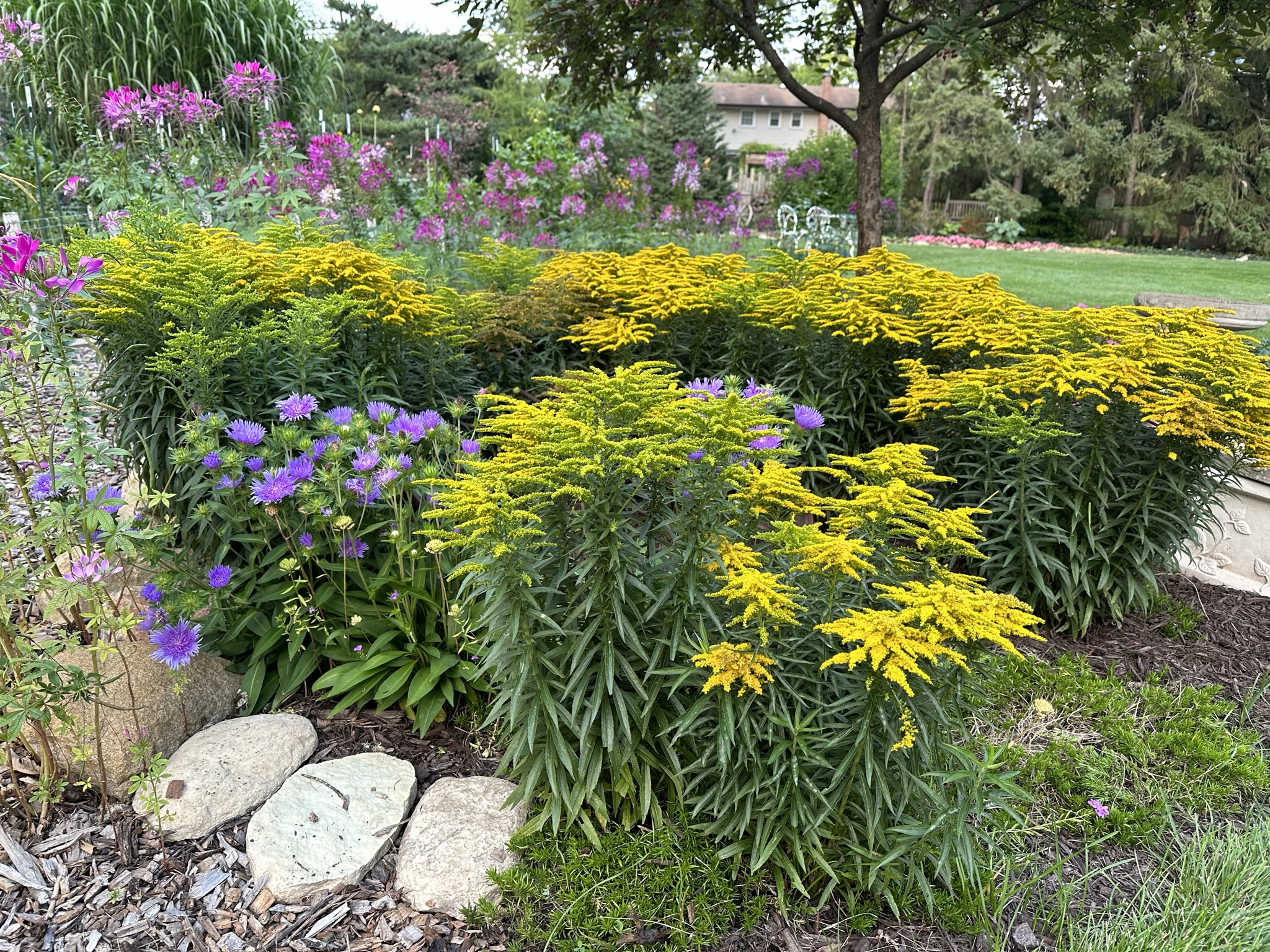
Goldenrod. Invasive! Not so. Buy the clump forming varieties and they stay where they belong. The tall pink cleome behind them, they don’t stay where they belong. But they are so easy to pull out as you walk along and so eye-catching that they are one of the few invasives that get to stay.
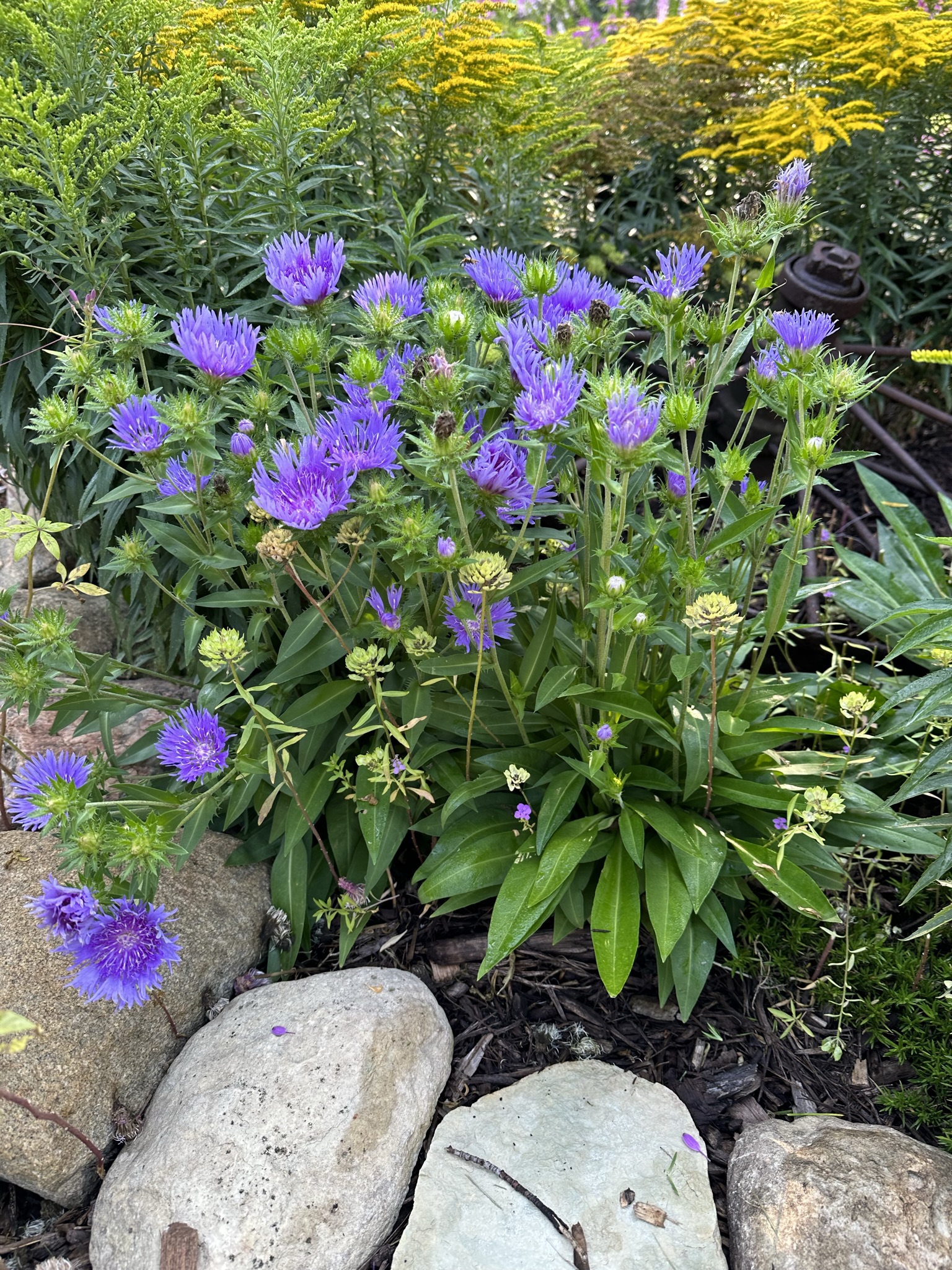
And last, one of my favorite parts of the garden…any part that has a plant I got from someone else. The one on the left has been passed along from Dawn to Lorraine to me. The one on the right is simply named Bill and Dorothy.
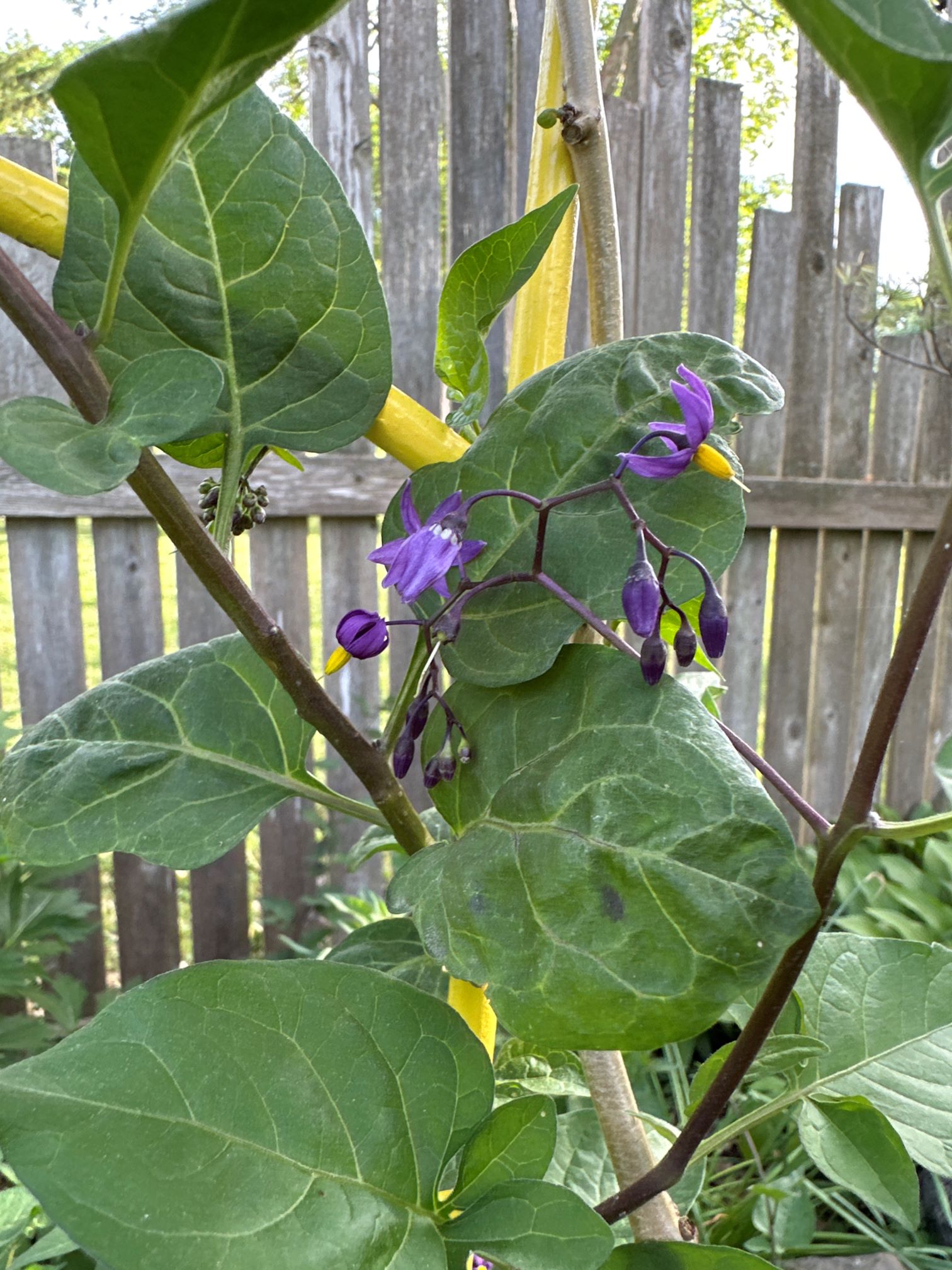
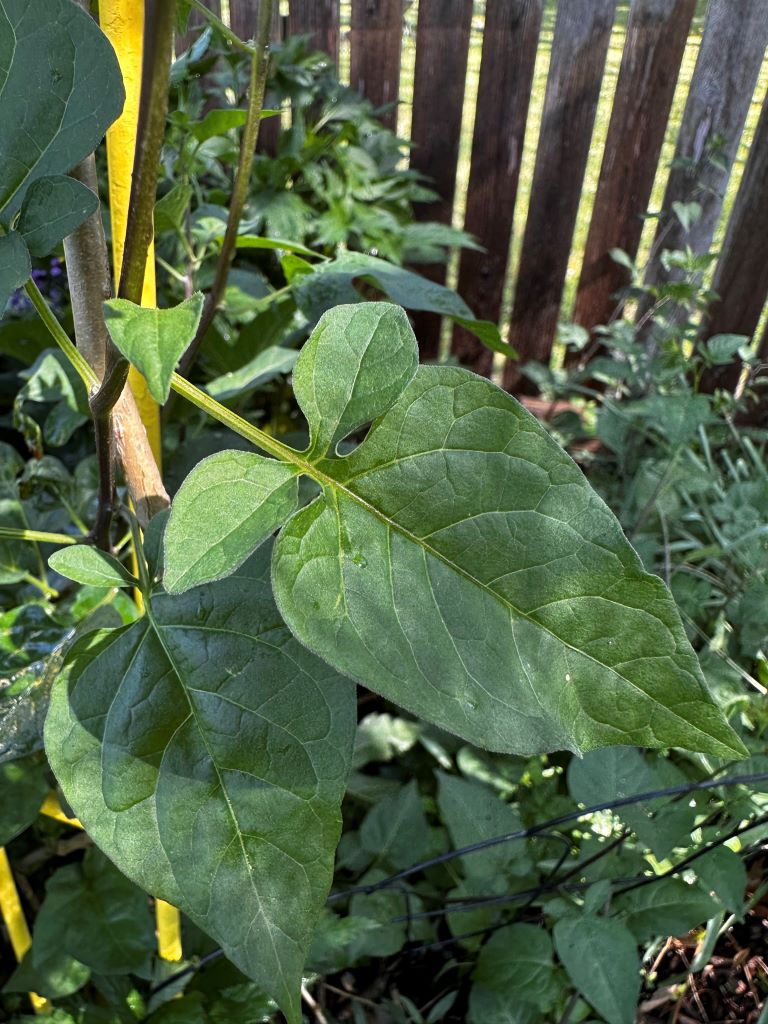
Its True Confession time – I’ve been fooled. The deceiver’s name is Nightshade, and for a long time I thought he was a good guy. He hid his true self behind the beauty of a trellised rose bush and I was misled. Deceived into thinking I was lucky enough to have a clematis on the same trellis as my rose bush, a clematis that would now flourish since we removed the rose bush. Flourish he did, clematis he was not. Here is my four step recovery program.
Step1 – Say goodbye
Like so many relationships, I saw what I wanted to see. But I couldn’t look through those rose-colored classes when he showed his true color in the purple flowers that bloomed recently. This wasn’t a vine to admire, it was time to end our relationship. My shovel and I took care of that.
Step 2 – Instant gratification
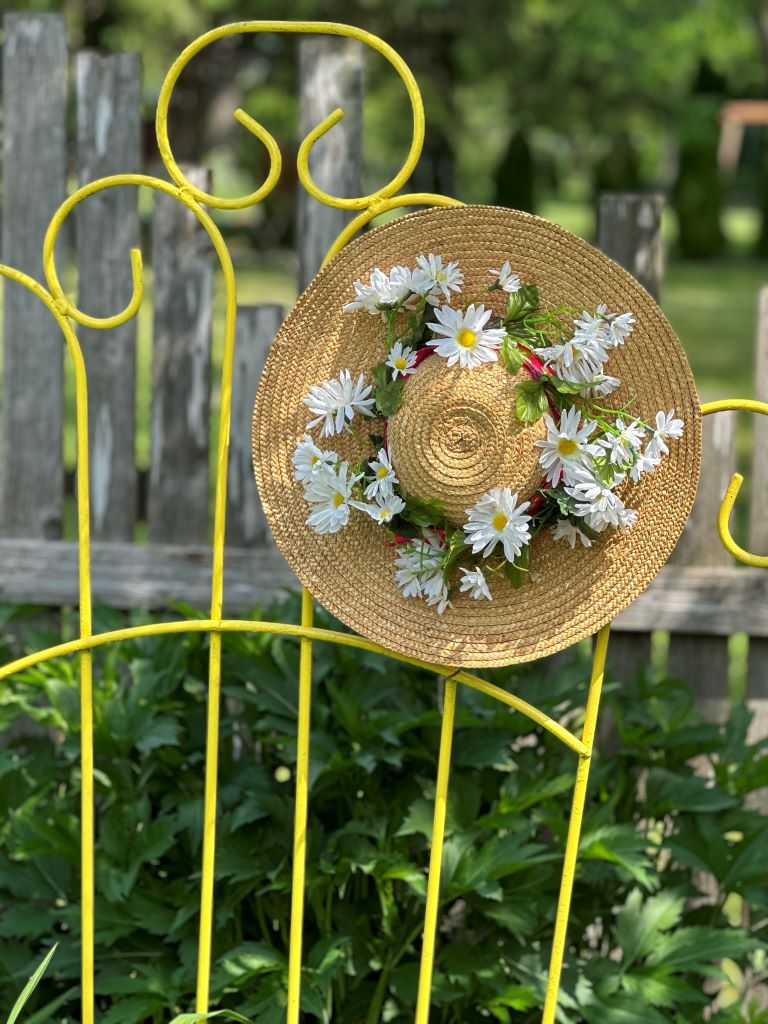
It was time to get over it. I needed immediate happy. Hats are happy. This one was in my basement and the flowers came from a vase in my bathroom. I didn’t need that vase there anyway.
Step 3 – Rebound
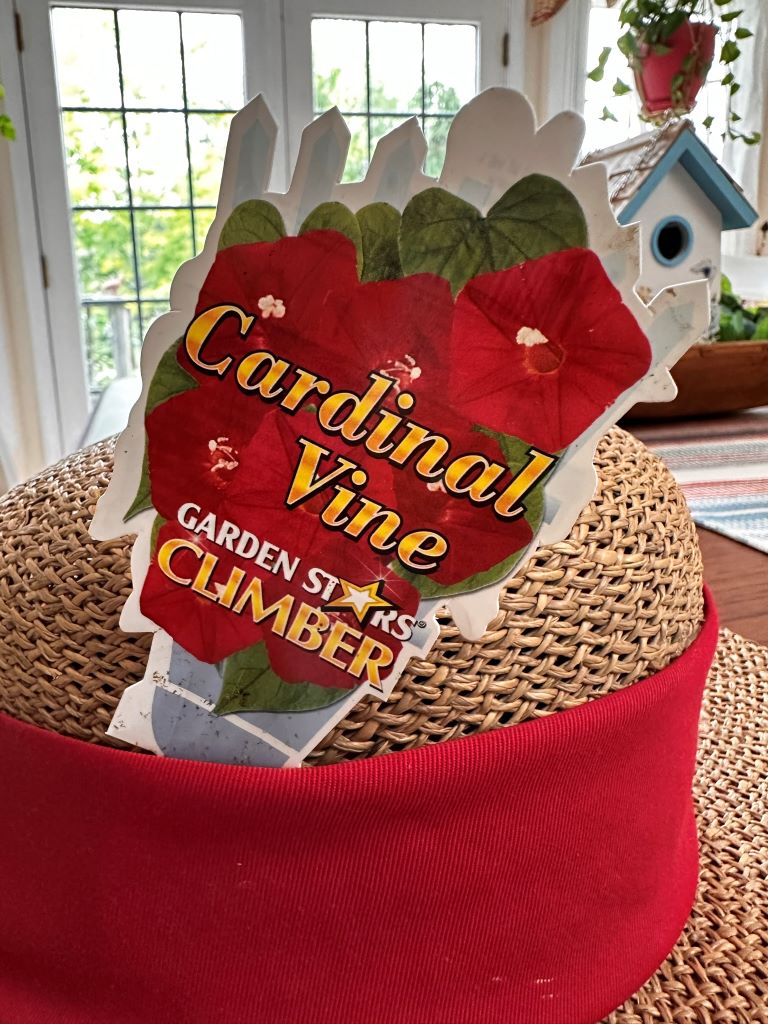
Sometimes you just need a rebound relationship to get you back in the game. I needed an annual, something that would bloom this summer. This climbing Cardinal vine will be my summer fling. I have high expectations for our short-term relationship.
Step 4 – A long term relationship
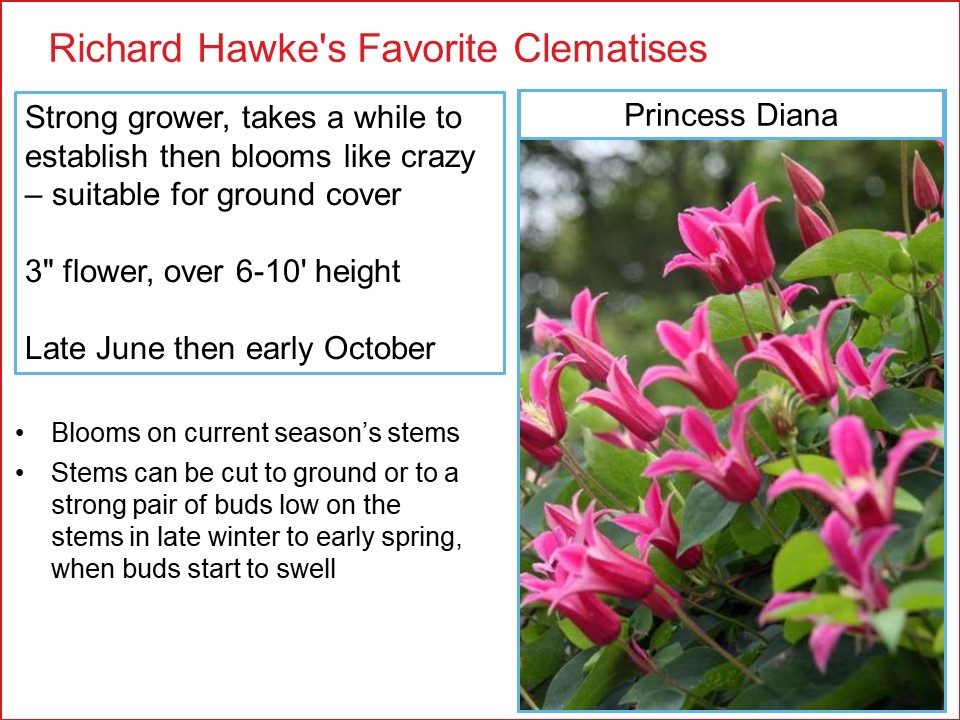
I choose wisely when it came to my next step relationship. This is Princess Diana clematis. I’ve had my eye on her for years, ever since Richard Hawke, the Plant Evaluation Manager at Chicago Botanic Gardens said she was one of his favorite clematis. It was the Chicago Flower and Garden Show, and this slide has been in my “Favorite Things” presentation ever since. Now she is mine! I know it takes a while for a relationship to bloom with a perennial; the courtship can take a few years. She will be worth the wait!
I am not the person who is out there in autumn cutting everything back. Nope, not me. I do what I have to in the autumn and leave the rest for the snow to land on. Given the choice, I am way more anxious to get out in my garden for cleanup when we finally get a nice spring day. Today was that day!
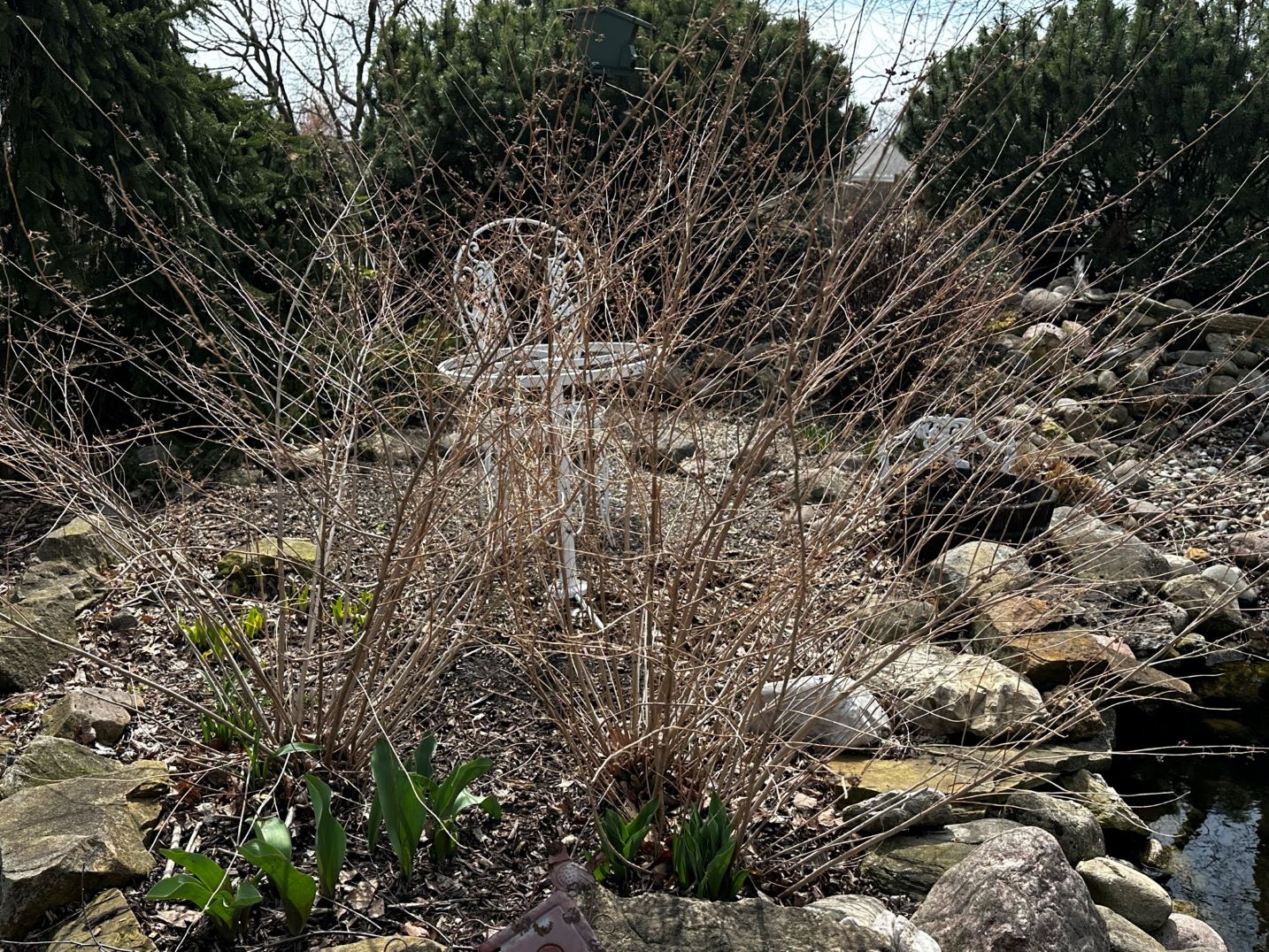
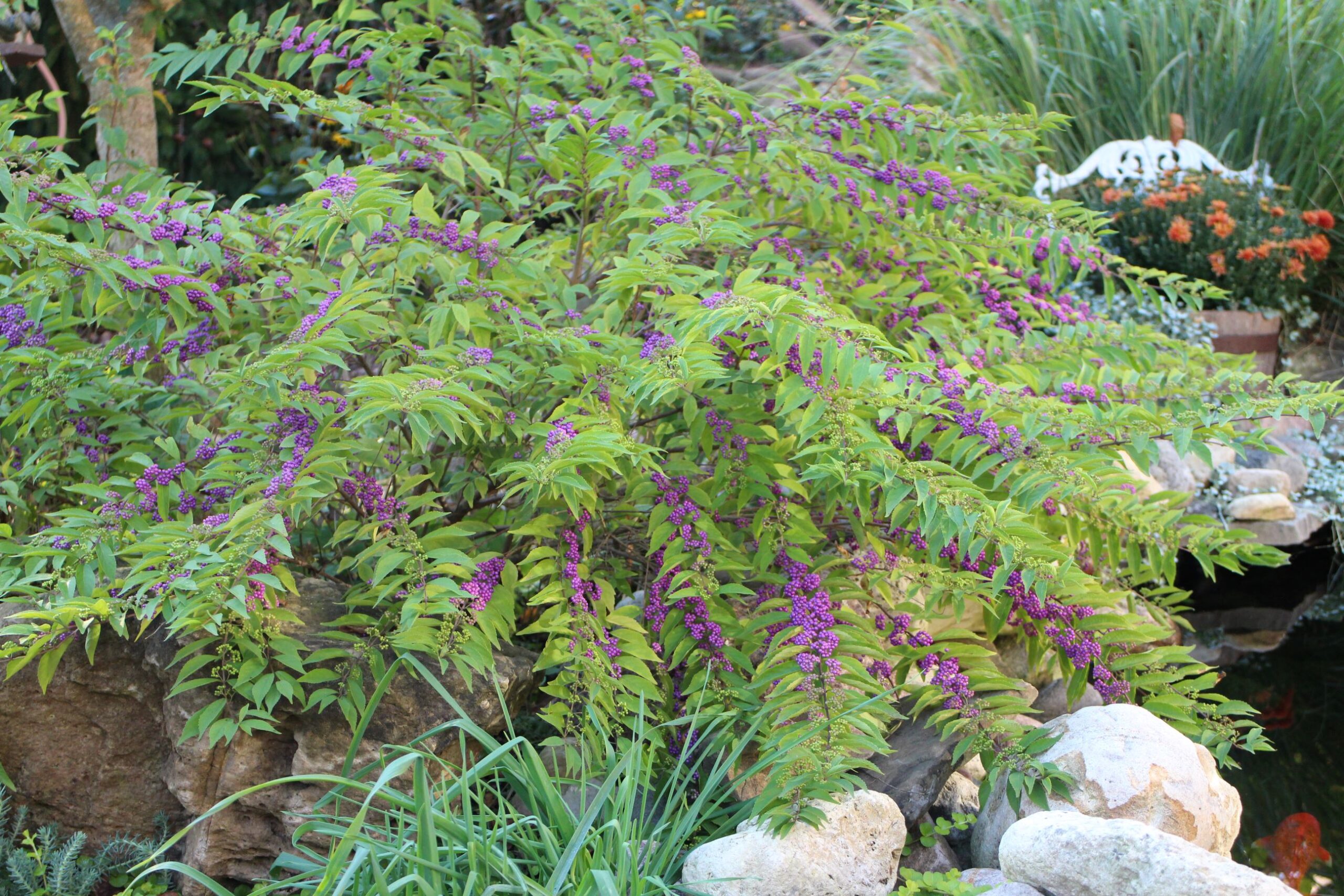
The beautyberry bush was on my list. It was nothing but a bunch of branches.
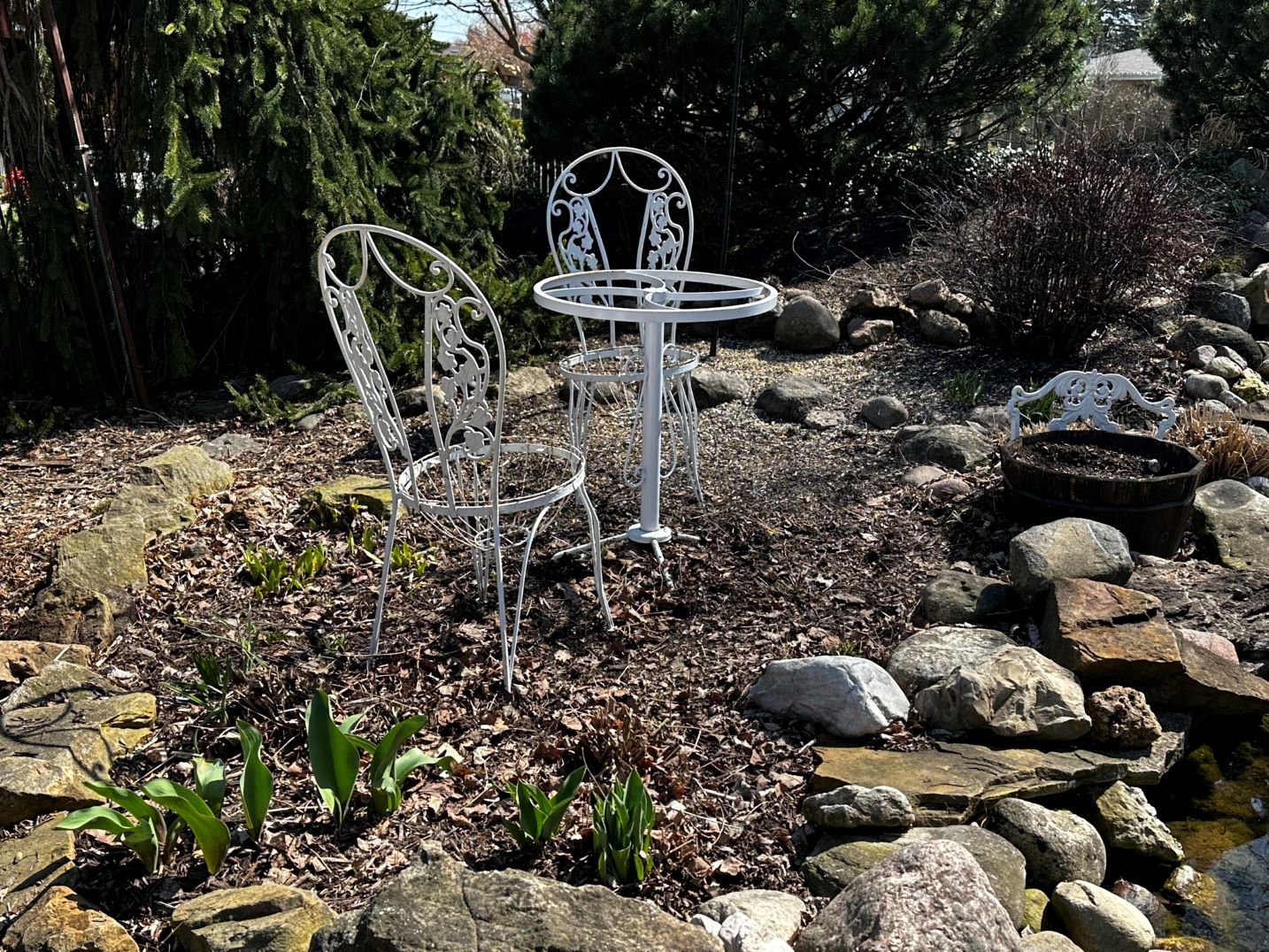
But give it a haircut, add the missing chair, and already the area looks better. Yes, I cut it all the way down.
By autumn, it will be in its glory!
Learn more about the American Beautyberry in this post. Put this bush on your must have list for when the garden centers are stocked.
It’s inevitable – we are bound to buy more dahlias. Yay! Mike will grow 200 plants from our 30 tubers and plant 75 in our yard. You would think that would be enough. But no, I was on the internet today buying more tubers. I used Dahlia Addict to find sellers of Belle of Barmera, and we are buying from Valley Ridge Farm for the first time. And of course, once you get to a seller, there is so much eye candy. I couldn’t help myself. I bought four more.
Belle of Barmera – GiantHollyhill Jitterbug – SmallMingus Wesley – LargeSam Huston – Giant
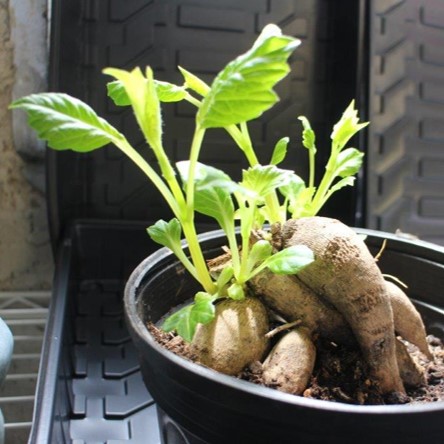
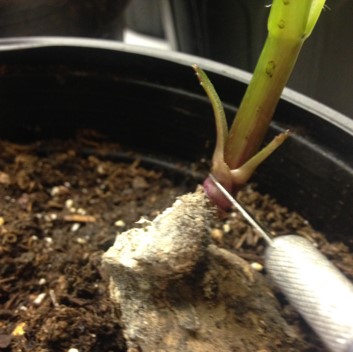
Our own tubers come out of storage and get planted in the basement in mid-March. They grow sprouts, Mike cuts the sprouts off, roots them, and in about 3 weeks we have a new plant. So for us, one tuber typically makes 3-6 new plants. No guarantee as each tuber does what God designed it to do. The tuber (below left) would have come from our inventory, not a seller’s. Its too big to be brand new, plus the ones from sellers won’t come till May. They typically go right in the ground outside.
A sprout ready for cuttingCutting a sprout to make a new plant
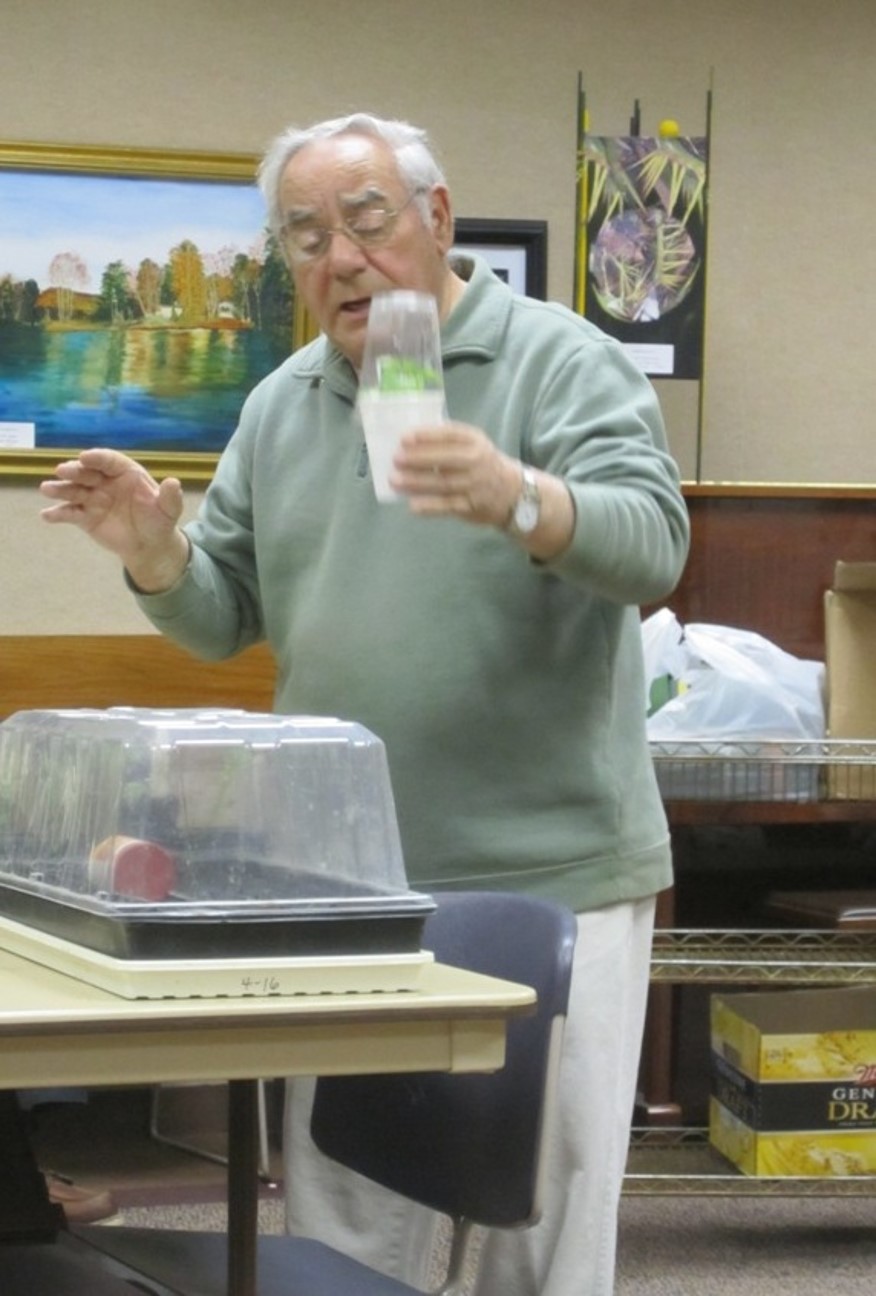
We do a lot of plants, but if you are just doing a few, do like Frank did below. Make yourself a mini-greenhouse from a Styrofoam or plastic cup filled with potting mix and cover it with a plastic cup. A plastic cup on the bottom is nice since you can see when the roots are growing. It will need really bright lights. Fluorescent works just fine, a window does not. Watch for roots, put it in a larger pot as needed, and plant it outside after the last frost.
Yes, BROWN is a color. Yes, it can be quite boring. But in the category of “work with what you are given”, we have abundant BROWN during our Chicagoland winters. This little guy certainly “worked his BROWN”. He is BROWN to begin with, and he has chosen a BROWN scarf. Still, he is totally adorable. So give the BROWN some love, I’ll show you how.
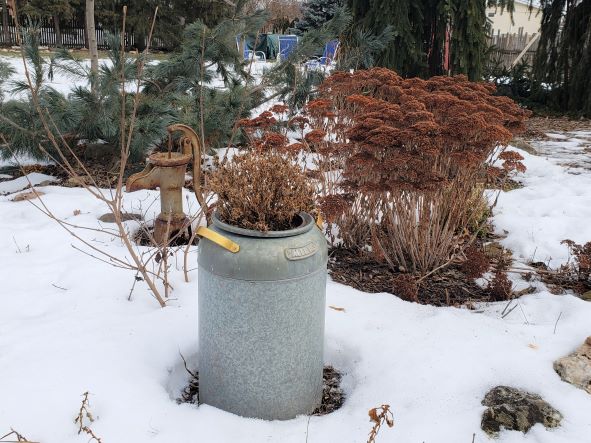
BROWN might not seem so appealing in your garden, but it can be. I think sedum can be one of the highlights. Contrast it against snow, and you have instant pretty. We don’t cut ours back till spring, and as you can see, the sedum is not alone. Even the dried out annual in the milk can and the old BROWN pump add winter interest right from our back door.
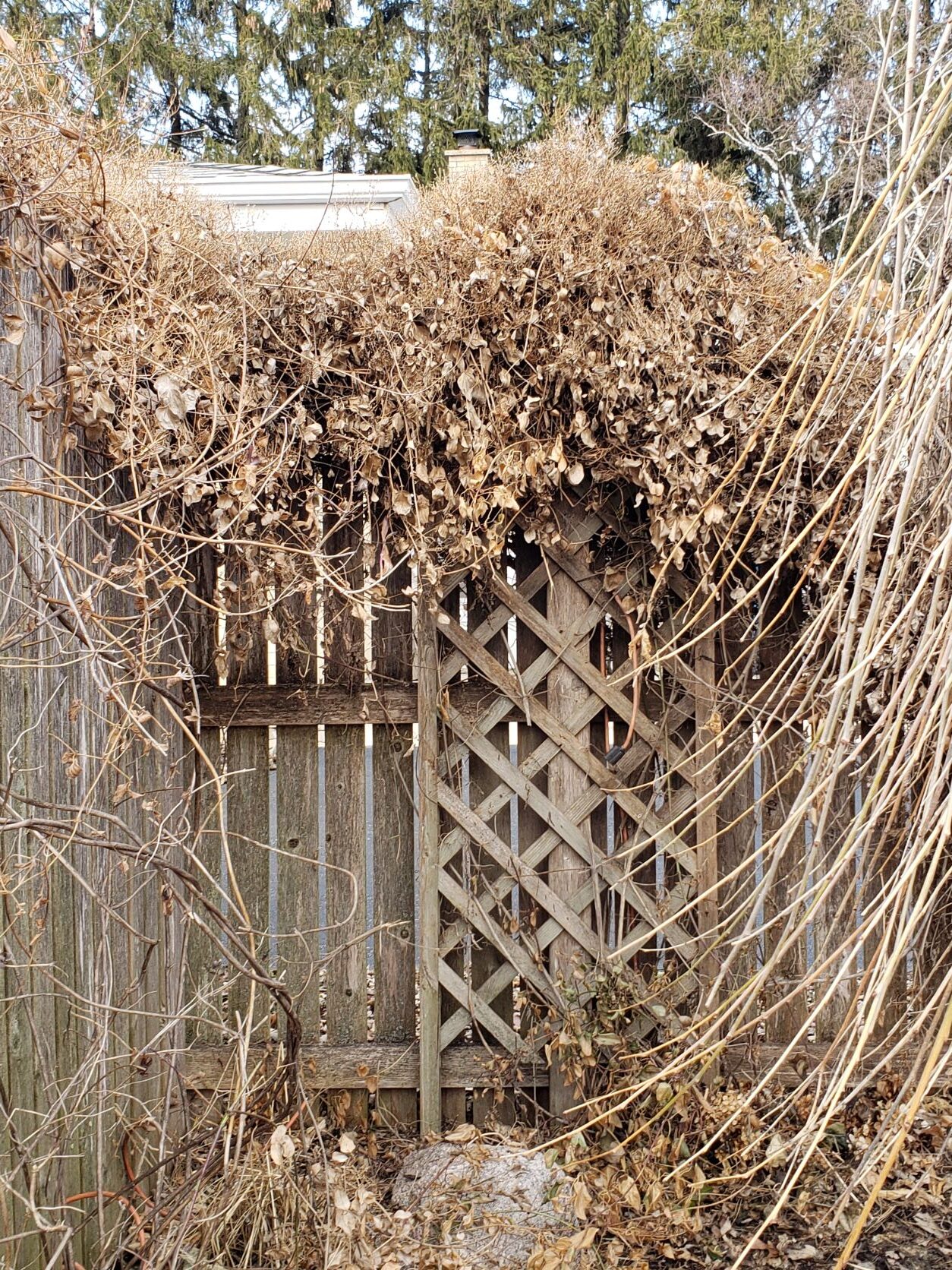
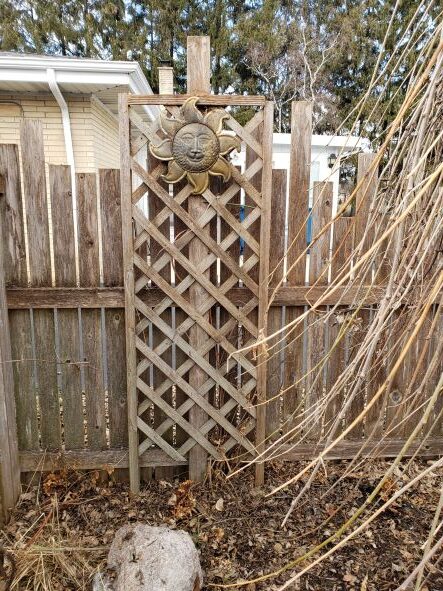
There are a LOT of things we don’t cut back till spring. We let the snow land on plants that are past prime and its way better than flat. Sure, the sweet autumn clematis below isn’t quite in its glory, still, its better than looking at a plain ol’ fence. We did cut it back in 2021 and let the BROWN sun shine through. I’m not sure that was the best way to go since we saw more of our neighbors house. BROWN would have been better and we did let it stay this year. On the other hand, seeing more of our interesting BROWN fence is always a bonus.
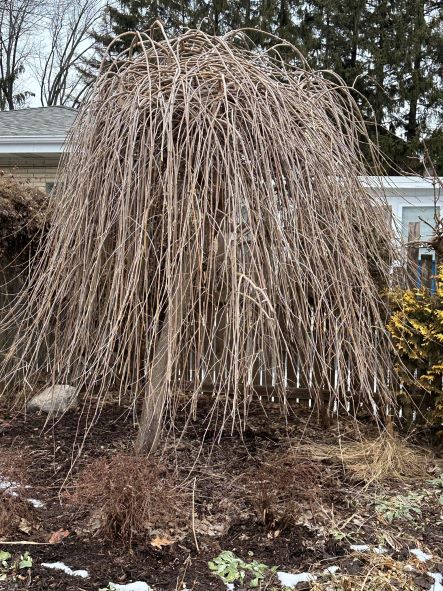
Are you wondering what those BROWN stems are in the photos above? Well wonder no more. Consider weeping trees in your garden and be rewarded with BROWN winter interest. Here is our weeping mulberry, and no, it doesn’t make those messy berries.
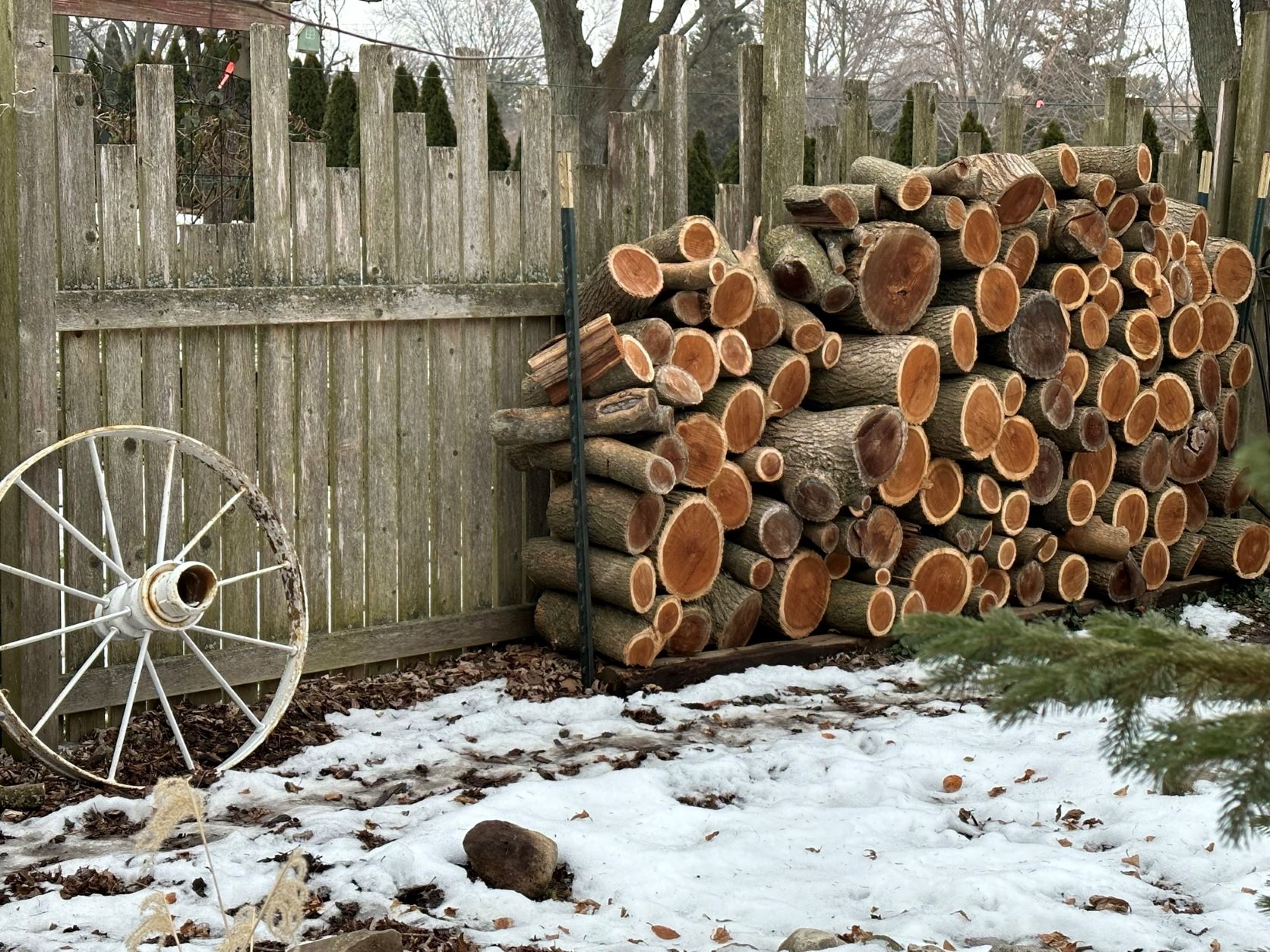
My gosh, as I look around I keep finding more BROWN. Mike moved our log pile this winter. It just happens to be in our line of sight from the house. Who would have known that it would be nice to look at?
Then there is my favorite BROWN of all, Aubrey, happily running around the yard no matter how cold it is. 75 pounds of bouncy cute!
So go on out there and enjoy the brown while you can, because it won’t be long till you have to look at spring flowers bursting with vibrant colors instead.
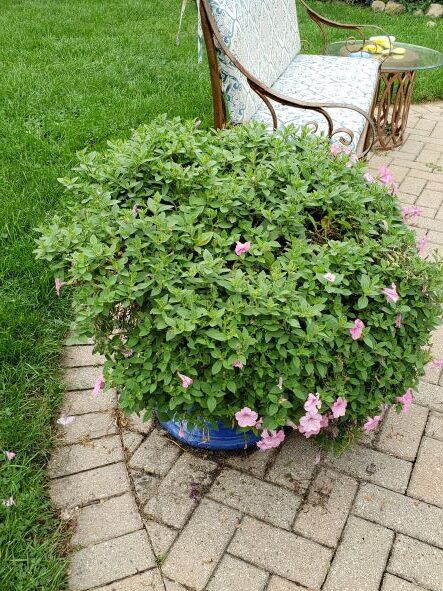
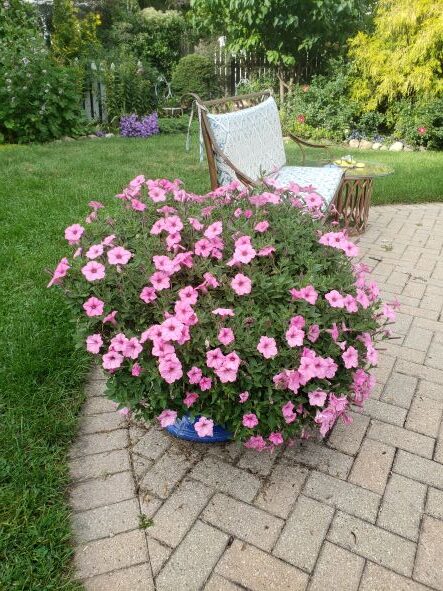
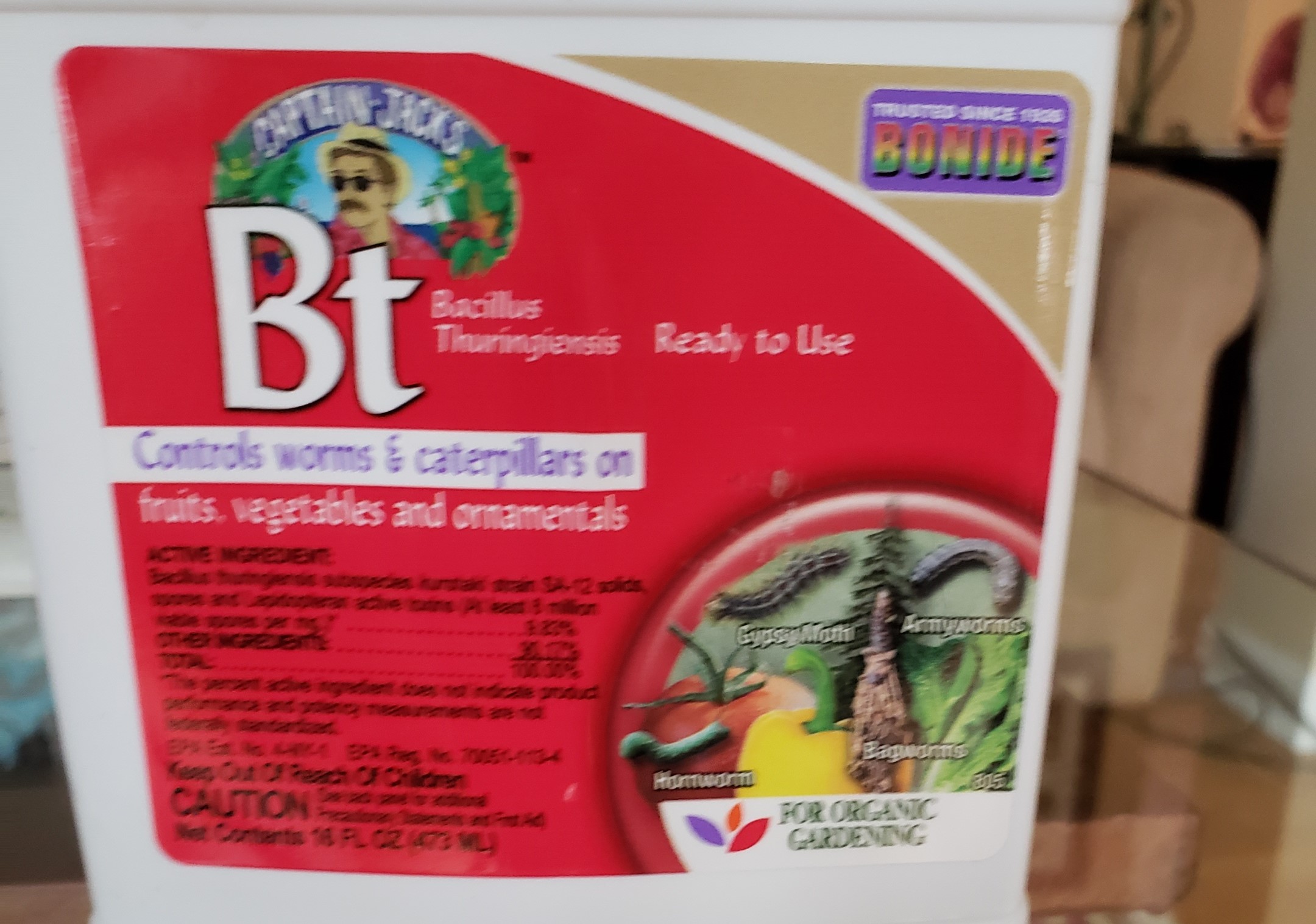
It was very sad. My prolific Vista Bubblegum petunias stopped blooming…just like they did last year. Sigh! But wait – Captain Jack’s BT spray to the rescue. Two weeks later and they are again blooming like crazy.
On September 6th, barely a bloom:
On September 20th, back to magnificent:
Now don’t just go out to Walmart and get Captain Jack’s BT spray for $7.
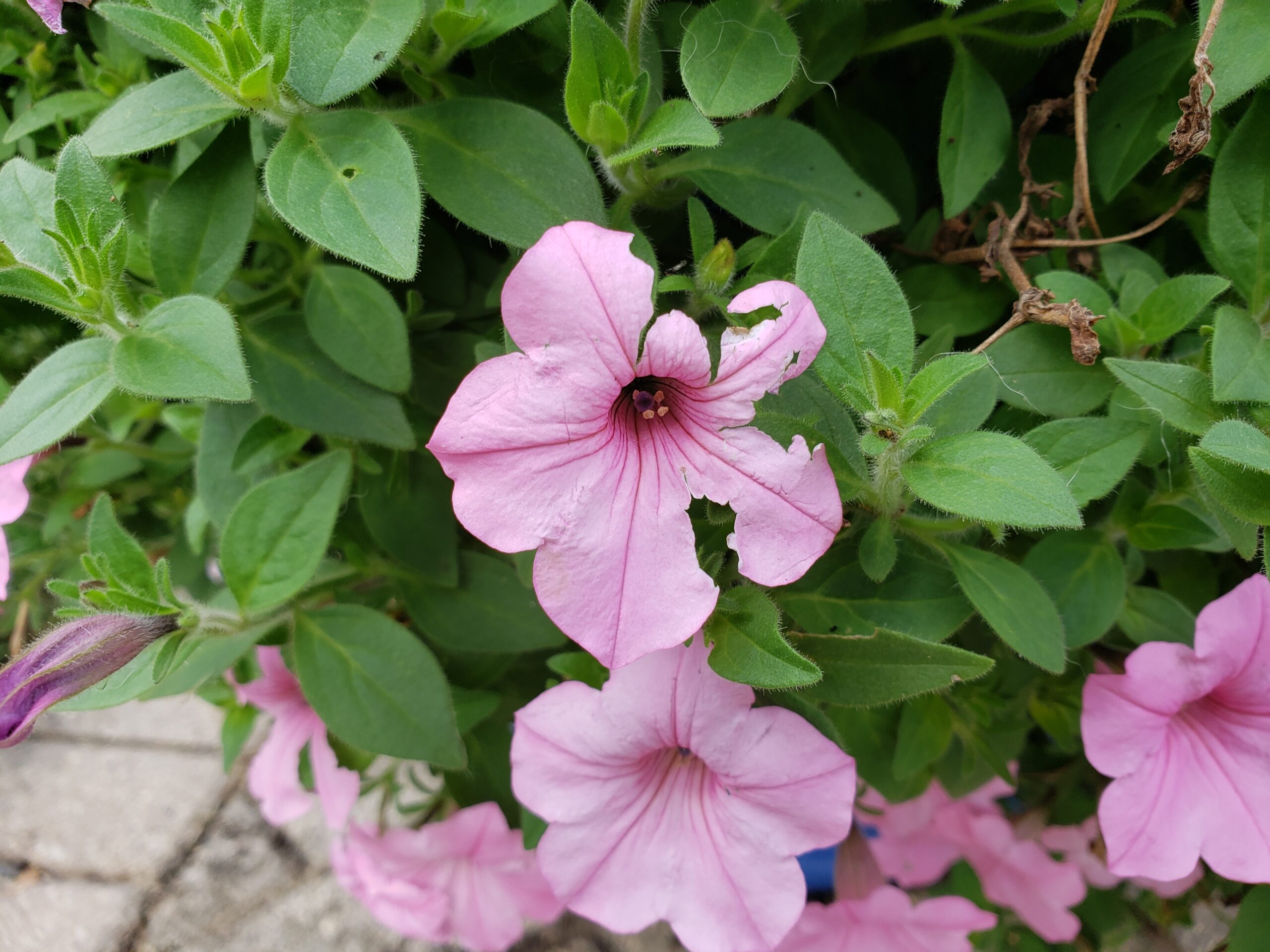
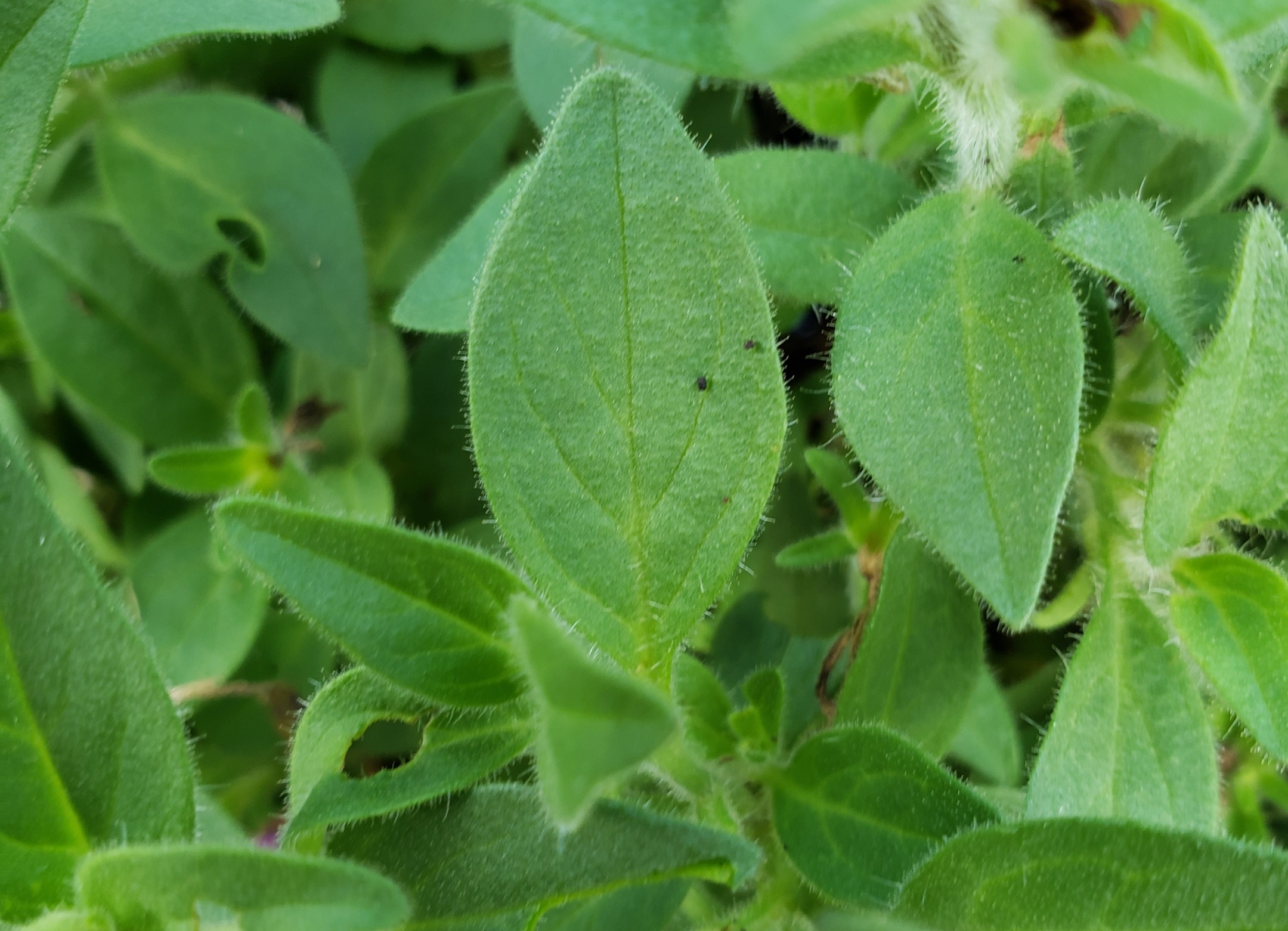
First make sure you are treating the cause of the problem; in our case it was bud worms. I’d never even heard of the culprits before. And I still haven’t seen them. But we have seen the flowers they chewed:
And tiny tiny bud worm poop:
So do your homework, and hopefully you will get an A+ and be rewarded with happy plants.